
Contents
Here we have put together the most recent affiliate marketing and compliance statistics published over the last three years.
Affiliate marketing performance, compliance issues, and fraud dynamics are highly sensitive to external change. Data from five or six years ago no longer reflects how affiliate programs operate today — or the risks they face.
This article focuses exclusively on newly published data and pairs each statistic with expert interpretation. The goal is not just to list numbers, but to explain what these affiliate marketing statistics reveal about compliance risks and growth opportunities in 2026.
Compliance Issues & Affiliate Marketing Statistics Overview 2026
-
• $18.4 billion in global sales revenue was generated by affiliate marketing in 2025 (Cognitive Market Research).
-
• 15.44% CAGR is forecast for affiliate marketing platforms through 2030 (Authority Hacker, Yahoo Finance).
-
• 20.64% of global ad impressions showed IVT signals — roughly 1 in 5 across digital advertising overall (Fraudlogix).
-
• $37 billion in U.S. ad spend is linked annually to invalid traffic (Fraudlogix).
-
• 43% of all invalid traffic has been attributed to affiliate networks (mFilterIt).
-
• 38% of branded affiliate traffic is exposed to brand bidding or hijacking (mFilterIt).
-
• $172 billion in global ad fraud losses is forecast by 2028, up from $88 billion in 2023 (Statista).
-
• $10.8 billion was saved by U.S. advertisers in 2023 through industry-wide anti-fraud programs, according to TAG.
-
• 93% of marketers consider PPC effective (eMarketer).
-
• $5.26 was the average cost per click in Google Ads in 2025 (WordStream).
-
• 7.52% was the average conversion rate across Google Ads campaigns in 2025 (WordStream).
-
• 6.66% was the average click-through rate for Google Ads in 2025 (WordStream).
-
• 52% say PPC is harder to manage than two years ago (PPCsurvey, 2025).
-
• 87% of industries saw CPC growth in 2025 (WordStream).
-
• 69.7% of marketers report spam or fake lead submissions from paid media campaigns (Lunio, 2024).
-
• 45% of affiliate fraud cases involved cloaking in 2024, up from 25% in 2022 (mFilterIt).
-
• 6.9% of ads across 605 brands showed affiliate brand bidding behavior (BforeAI).
-
• 43.7% of average revenue is driven by organic search (Substrakt).
-
• $102.9 billion in revenue was generated by search advertising in 2024 (IAB).
-
• 79% of affiliates rely primarily on SEO for traffic (Authority Hacker).
-
• 64.48% of affiliate traffic is generated through blogging (Zippia Research).
-
• 54% of all clicks go to the top 3 Google results; only 0.63% reach page two (Backlinko).
-
• 6.11% of new pages reach Google’s top 10 within a year (Ahrefs).
-
• 681,099 domains were registered in a single day in July 2024, with 19% flagged as irregular (DomainTools).
-
• 47,613 phishing domains were detected in March 2025 — the highest monthly count on record (NetBeacon).
-
• 1.5+ million domains were reported for phishing in 2024, a 38% YoY increase (Interisle).
-
• 4,300+ malicious domains were registered by a single user in 2025 as part of a phishing campaign targeting travelers (Netcraft).
-
• 48.4% of malicious look-alike domains used valid TLS certificates to appear legitimate (ThreatLabz).
-
• 10% of malware-related domains impersonated real brands (Forescout, 2025).
-
• $406 million annually is lost by the top 250 U.S. websites due to typosquatting and recovery costs (FairWinds).
The Size of The Global Affiliate Market & Affiliate Marketing Growth Projections
| Metric | Value |
|---|---|
| Global Affiliate Revenue (2025) | $18.45B |
| North America Share | ~40% |
| Platform Market CAGR (to 2030) | 15.44% |
In 2025, global affiliate market sales revenue reached $18,445 million, with North America alone accounting for roughly 40% of this market (Cognitive Market Research). This concentration highlights that North American affiliate programs shape industry standards worldwide.
The global affiliate marketing platform sector was valued at $16,207.46 million in 2023 and is expected to grow at a compound annual growth rate (CAGR) of 15.44%, reaching $38,352.89 million by 2030 (Authority Hacker, Yahoo Finance). This growth is driven by the ongoing shift towards measurable, ROI-focused campaigns, especially valued in high ticket affiliate marketing.
However, as affiliate programs expand, the compliance issues and fraud risks become increasingly significant. And fresh affiliate marketing statistics clearly reflect that.
Traffic Exposed to Fraud & Compliance Issues in Affiliate Networks
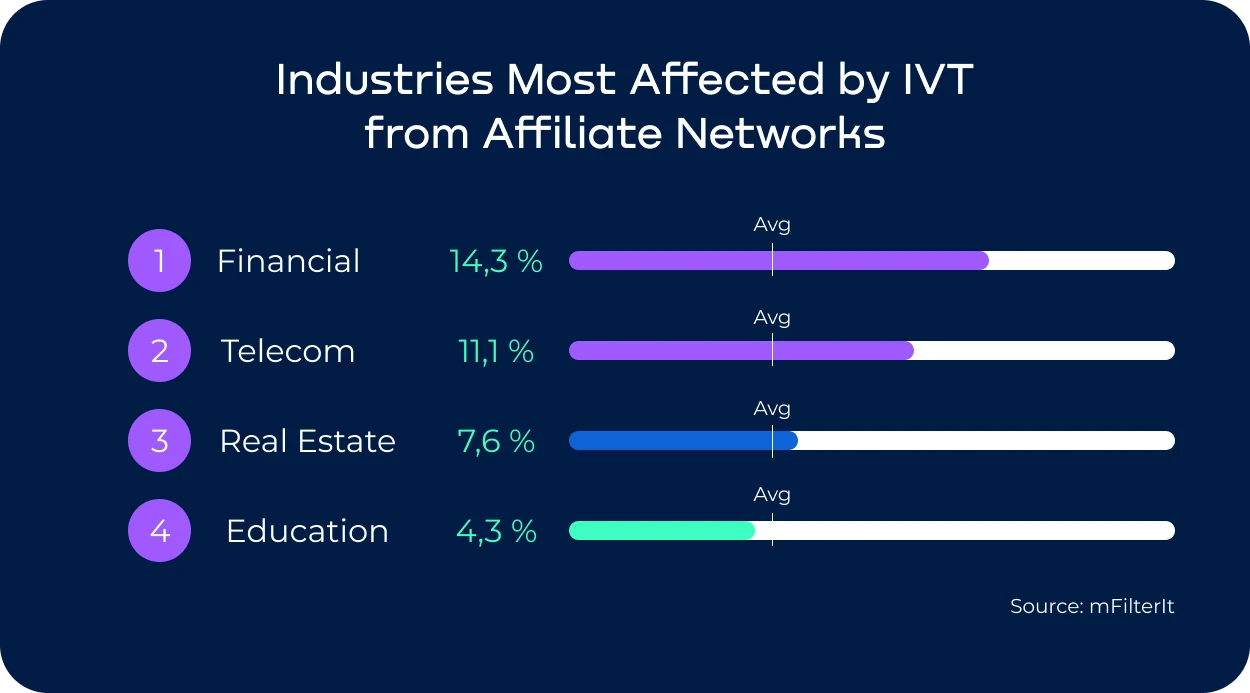
In 2025, over 38% of brand traffic in affiliate networks was exposed to brand bidding, impersonation, and last-click hijacking (mFilterIt). Moreover, the research conducted by BforeAI in 2024 found that out of 605 brands, 6.9% of all collected ads were instances of affiliate brand bidding, further emphasizing how common unauthorized promotion can be in large networks. This statistic illustrates that as affiliate marketing growth accelerates, so too does the potential for compliance issues.
The impact of invalid traffic on affiliate programs is equally concerning. Approximately 43% of invalid traffic was traced back to affiliate networks, driven by incentivized actions, click spamming, and organic hijacking (mFilterIt).
Statistics on affiliate marketing also reveal that fraudulent tactics have become more sophisticated over time. For instance, cloaking — a method used to hide abusive PPC and search hijacking activities — was involved in 25% of affiliate fraud cases in 2022, rising sharply to 45% by 2024 (mFilterIt). This increase reflects the evolving ingenuity of fraudsters.
Understanding and addressing these risks is necessary for brands that rely on affiliate marketing.
The Effectiveness of PPC and Paid Media Advertising
| Metric (Google Ads, 2025) | Value |
|---|---|
| Avg CPC | $5.26 |
| Avg CTR | 6.66% |
| Avg Conversion Rate | 7.52% |
According to data, search advertising remains the largest segment of digital advertising, reaching $102.9 billion in revenue and growing 15.9% year over year, while maintaining a dominant 39.8% market share (Internet Advertising Revenue Report 2024, IAB). Furthermore, 93% of marketers consider PPC an effective or highly effective marketing channel (eMarketer). So it makes sense that pay-per-click ads are widely used among digital marketers and affiliates working with brands.
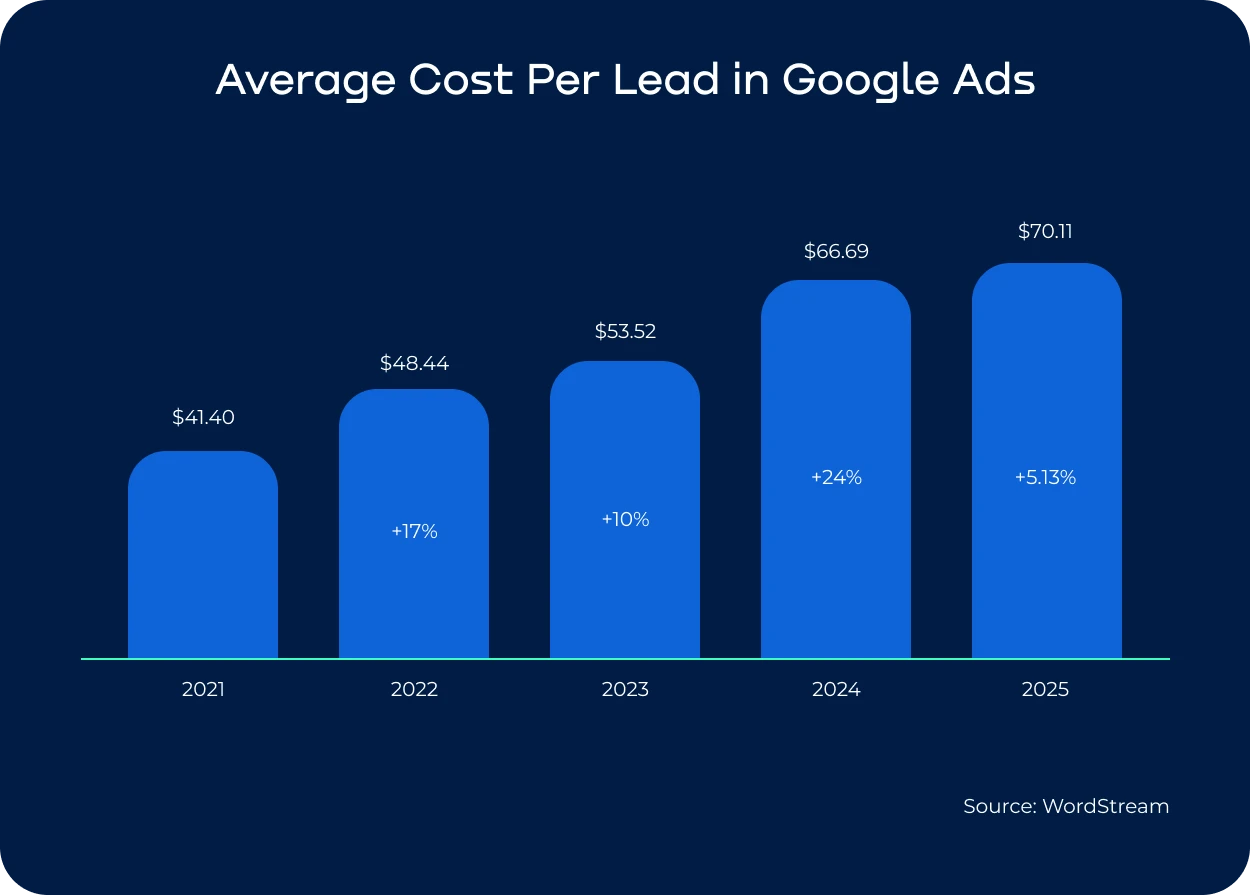
However, managing paid media campaigns has grown increasingly complex. Over half of PPC marketers (52%) report that running campaigns is more challenging than it was two years ago due to heightened competition and evolving data dynamics (The State of PPC Global Report 2025). Rising search advertising costs follow along, raising the pressure even further: the average cost per click (CPC) in Google Ads increased from $4.66 in 2024 to $5.26 in 2025, with CPC rising in 87% of industries and cost per lead increasing in 13 of 23 sectors (Google Ads Benchmarks 2025, WordStream). However, the average conversion rate in Google Ads in 2025 remained strong at 7.52%, reinforcing the channel’s value for driving targeted outcomes.
While PPC offers clear advantages, there’s also a matter of compliance issues and traffic quality. A notable 69.7% of marketers reported problems with spam or fake lead submissions from paid campaigns (Wasted Ad Spend Report 2024, Lunio.ai). In addition, analysis of 105.7 billion ad impressions revealed a 20.64% global invalid traffic (IVT) rate — meaning roughly one in five impressions contained fraud signals. That leads to an estimated $37 billion in U.S. ad spend annually affected by invalid traffic (Fraudlogix). These statistics underscore the critical role of monitoring and enforcement in paid media.
The Effectiveness of SEO & Blogging
Statistics on affiliate marketing reveal that SEO remains the backbone of affiliate traffic:
-
• 43.7% of revenue comes from organic search (2023 Benchmark Report).
-
• 64.48% of affiliates rely on blogging (Zippia Research, 2023).
-
• 79.1% affiliate marketers name SEO as their primary traffic source (Authority Hacker, 2025).
But organic success is increasingly fragile:
-
• 54% of clicks go to the top 3 results (Backlinko, 2024).
-
• Only 6.11% of new pages reach the top 10 within a year (Ahrefs, 2024).
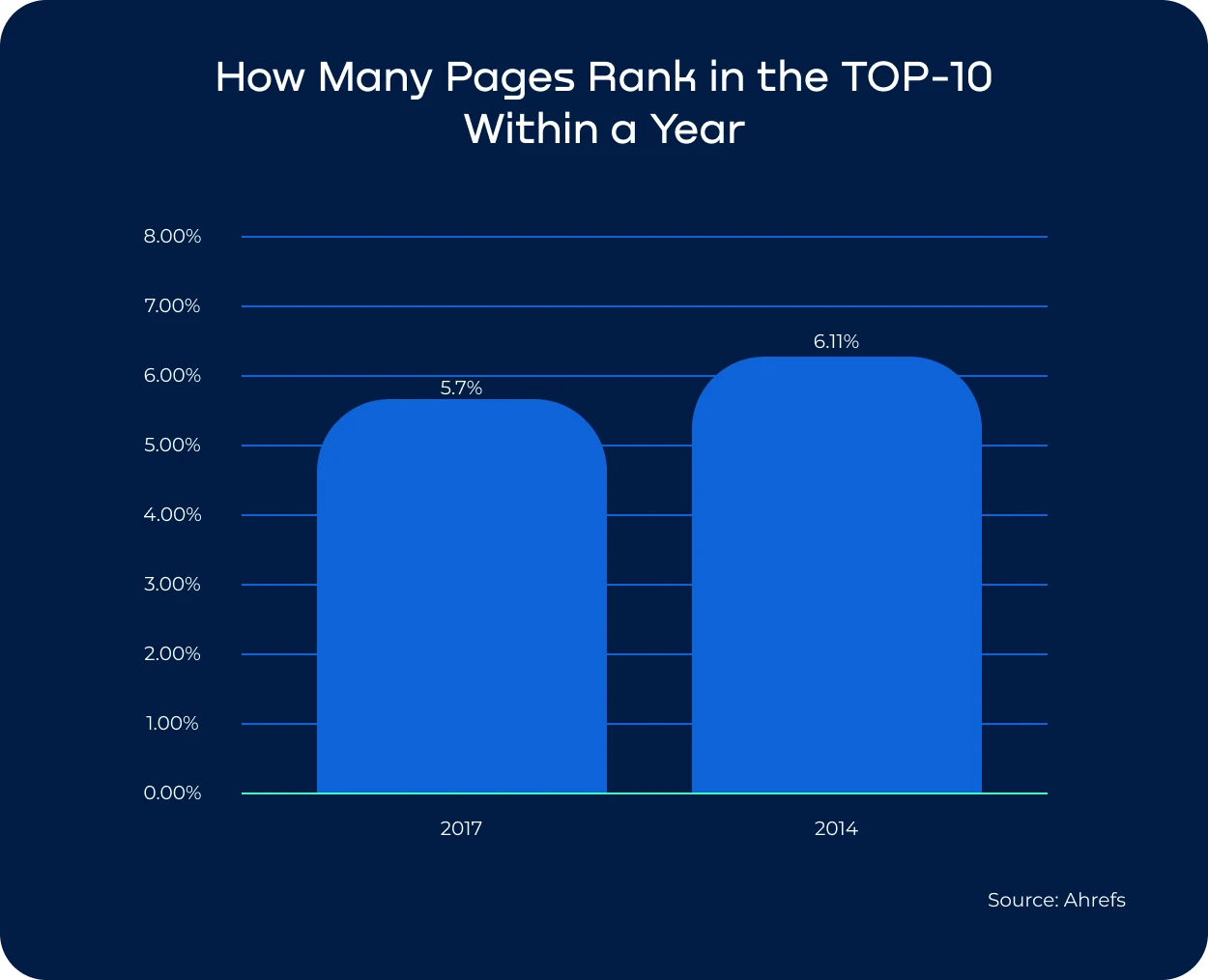
This highlights the critical importance of monitoring search performance and maintaining competitive positioning. Ensuring compliance in affiliate campaigns is especially important as the obvious value of organic traffic leads to a growing number of fraudulent domains.
The Rise of Fraudulent Websites
Five years ago, phishing relied on crude tactics. Today, fraud no longer looks suspicious: SSL certificates, clean UI, and SEO-optimized content allow fake sites to blend into legitimate ecosystems — including affiliate funnels.
Typosquatting and brand impersonation have emerged as primary tactics employed by cybercriminals. Between February and July 2024, ThreatLabz analyzed over 30,000 lookalike domains across 500 of the most visited websites, finding more than 10,000 to be malicious. Notably, 48.4% of fraudulent domains used TLS certificates to appear legitimate.
Research shows that the 250 most highly trafficked U.S. websites lose approximately $327 million annually due to typosquatting, lost impressions, unrealized sales, and misallocated advertising spend. When legal recovery mechanisms such as UDRP proceedings are considered, remediation efforts could add up to an additional $79 million in costs, bringing total annual losses to roughly $406 million (FairWinds). These figures highlight how brand impersonation translates directly into measurable financial damage.
Data from Forescout (Vedere Labs, 2025) shows that 10% of domains associated with malware communication over a six-month period (December 2024–June 2025) were brand impersonation or look-alike domains. The presence of these fraudulent websites not only threatens direct revenue through deceptive traffic but also raises significant compliance issues.
Automation-Driven Spikes in Registration of Fraudulent Domains
Over the past few years, the number of unique domain names reported for phishing has increased dramatically, rising by 38% year-over-year to over 1.5 million domains (Phishing Landscape 2025, ICG).
Automation has fundamentally changed the scale and speed at which malicious actors can scale trademark abuse. Fraudsters no longer need teams — just scripts and registrar access.
Clear evidence of this trend can be seen in domain registration data from 2024. 681,099 new domains were registered in a single day on July 3, with approximately 129,154 of them flagged as irregular (DomainTools). Such concentrated bursts strongly suggest automated registration activity rather than organic domain growth.
These automation-driven patterns become even more concerning when examined through the lens of phishing and brand abuse. In March 2025, NetBeacon’s Measurement and Analytics Platform (MAP) recorded the highest number of unique domain names associated with phishing (47,613) and the largest month-on-month increase in phishing domains at 63%.
Individual cases further illustrate the impact of automation on brand impersonation risks. In 2025, Netcraft documented a single fraudster registering over 4,300 malicious domains targeting users planning vacations, with 511 domains registered in just one day (Netcraft, 2025).
Such bursts represent a direct threat to branded traffic. These domains are often used for impersonation, brand bidding affiliate marketing abuse, or redirection schemes that hijack last-click attribution.
Financial Losses From Cybercrime, Fraud, and Compliance Issues
Global ad fraud costs are projected to grow from $88 billion in 2023 to $172 billion by 2028 (Statista). This growth is tied to several factors: the increasing number of fraudulent tactics that exploit attribution models, paid search dynamics, and affiliate marketing growth.
The Financial Impact of Anti-Fraud Efforts
While statistics on cybercrime and advertising fraud often highlight growing losses, there is equally compelling evidence that coordinated anti-fraud efforts deliver measurable financial value. Industry-wide initiatives focused on transparency, enforcement, and compliance have proven that fraud prevention is not merely a defensive cost center, but a direct contributor to revenue protection. In 2023 alone, U.S. advertisers saved an estimated $10.8 billion as a result of industry anti-fraud programs, according to a report by the Trustworthy Accountability Group (TAG), published in 2024.
This data demonstrates a critical point: prevention works. Brands that invest in detection, enforcement, and evidence-backed compliance don’t just reduce risk — they recover revenue.
Conclusion: The Importance of Preventing Compliance Issues
Affiliate marketing is growing — but so are compliance risks, driven by automation, rising media costs, and increasingly sophisticated fraud techniques. At the same time, industry statistics clearly show that preventive measures have a measurable financial impact.
For brands running affiliate programs, monitoring is the foundational to sustainable growth.
Bluepear helps brands do exactly that — by continuously monitoring affiliate compliance, detecting trademark abuse, and providing evidence-backed insights that turn prevention into profit. Protect your brand with Bluepear: a subscription is a small investment that can save you thousands of dollars in losses from brand abuse.

FAQ: Compliance Trends & Affiliate Marketing Growth
Is affiliate marketing still effective in 2026?
Yes, affiliate marketing remains an effective and growing channel in 2026. Industry data shows continued expansion of the global affiliate market, supported by strong adoption across SEO, paid media, and content-driven strategies.
Despite rising compliance issues and fraud-related risks, affiliate marketing continues to deliver measurable results when programs are properly managed. The key differentiator is not whether affiliate marketing works, but how well brands enforce affiliate program compliance and protect traffic quality as the ecosystem scales.
Which traffic channels are most effective for affiliate marketing?
Current affiliate marketing statistics indicate that SEO, blogging, and paid search (PPC) remain effective. Organic search drives a significant share of affiliate revenue, while paid media continues to perform strongly when campaigns are carefully monitored.
Why are compliance issues a major concern in affiliate marketing?
As programs scale, so do risks related to brand bidding, impersonation, cloaking, and invalid traffic. Data shows that a meaningful share of fraudulent activity originates within affiliate networks, making compliance statistics a critical input for strategic decision-making. Without active monitoring and enforcement, even high-performing affiliate programs risk revenue leakage, inflated costs, and reputational damage.
How does AI impact affiliate marketing?
AI plays a dual role in modern affiliate marketing. On the positive side, it enables affiliates to create content more efficiently, optimize SEO strategies, and improve campaign targeting. At the same time, AI lowers the barrier for malicious actors by enabling large-scale automation — such as the rapid creation of fake domains, impersonation websites, and sophisticated fraud schemes.
What should brands focus on to succeed in affiliate marketing going forward?
Brands should focus on balancing growth with control. This means investing not only in traffic acquisition and partner expansion, but also in compliance infrastructure — such as monitoring brand bidding activity, validating traffic sources, and responding quickly to violations. As compliance trends evolve, long-term success in affiliate marketing will depend on treating compliance as a strategic advantage rather than a reactive safeguard.

Check if Your Competitors Bid on Your Brand