
Contents
According to Impact.com’s Global State of Affiliate Marketing Report 2025, 74% of brands generate 11–30% of their revenue from affiliate channels. These numbers indicate that affiliate programs serve as an important source of leads for many brands — and so, maintaining transparency and efficiency is a top priority. This guide is designed for in-house teams and agencies that want to establish control over compliance and performance in affiliate programs. In it, we explain how to choose an affiliate tracker and perform an affiliate marketing audit that will highlight hidden problems and growth opportunities.
Affiliate Marketing Audit Checklist
Let’s start with a concise checklist of steps that provides a high-level overview for teams that need a clear, structured plan of action.
1. Tracking:
-
• Verify affiliate links and attribution accuracy
-
• Check for broken links or incorrect redirect rules
-
• Confirm that your affiliate tracking software is capturing all conversions
-
• Identify discrepancies between network reporting and internal analytics
2. Compliance:
-
• Review adherence to guidelines and policies
-
• Flag violations such as unauthorized brand bidding, cloaking, or misleading promotions
-
• Ensure that disclosure statements comply with local regulations
-
• Detect potential affiliate fraud
3. Content:
-
• Audit affiliate marketing content for accuracy, relevance, and consistency with brand messaging
-
• Verify that SEO practices do not inadvertently violate policies
-
• Identify outdated and deceptive content that could negatively impact traffic, conversions, and brand reputation
4. KPIs & Metrics:
-
• Review primary performance indicators: CTR, conversion rates, revenue per affiliate, and average order value
-
• Compare affiliate program performance to benchmarks or historical data
-
• Identify non-compliant or underperforming partners requiring further investigation
5. Documentation & Reporting:
-
• Maintain a centralized audit log for all findings
-
• Prepare a summary dashboard highlighting critical compliance issues and performance gaps
-
• Compile a list of actions to fix problems and implement improvements
-
• Schedule future reviews to ensure ongoing program integrity
In the following sections of this guide, we’ll provide additional instructions, affiliate tracking software recommendations, and a detailed look into monitoring and applying improvements after an audit.
How to Monitor Affiliate Compliance and Gather Data on Program Performance
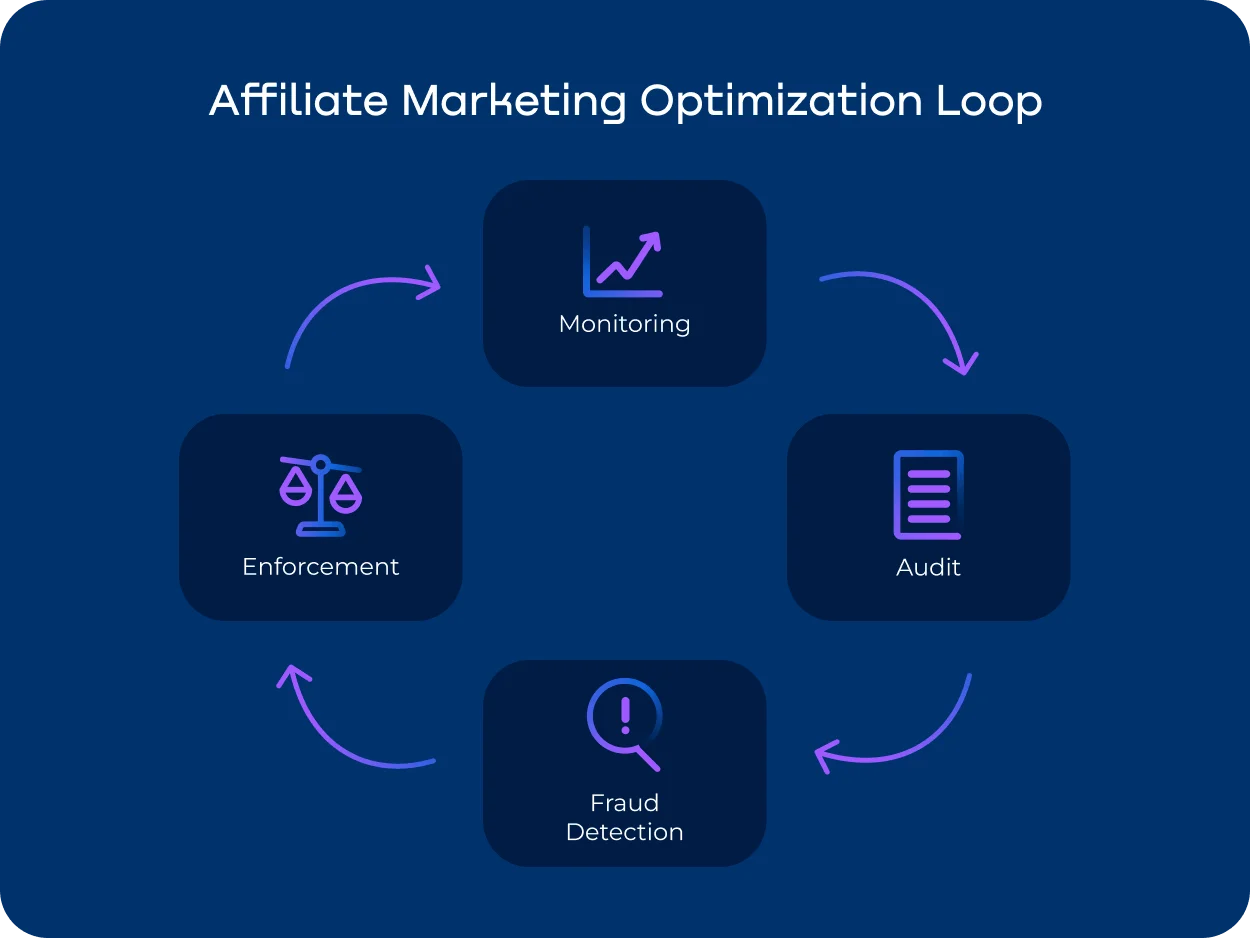
Before you can do an affiliate marketing audit, you need to establish affiliate program monitoring. It is a continuous process of gathering data that ensures that at the start of your audit you already have clean and structured data to work with, without spending hours on manual research and recording.
Without a monitoring workflow, gathering information turns into the first step of an audit — one that demands a lot of time and effort. That’s the problem that affiliate tracking software is designed to solve. Automation ensures that data is collected continuously, so that your audits can focus on analysis and insights.
That brings us to the topic of using an affiliate marketing tracker.
What Is an Affiliate Tracker?
42% of marketers report difficulties with tracking and accurate attribution in affiliate programs (NewMedia). This is the problem that an affiliate marketing tracker is designed to solve. It is a platform that connects clicks, sessions, conversions, and commissions across the affiliate ecosystem. During an affiliate marketing audit, this information is used to review attribution and performance.
Here’s what an affiliate tracker does:
-
• Records clicks and user sessions
-
• Stores tracking identifiers (cookies or server-side IDs)
-
• Connects traffic sources to conversions
-
• Assigns commissions based on predefined attribution logic
-
• Calculates commissions
-
• Tracks postbacks and conversion events
-
• Flags anomalies in traffic patterns
Affiliate Tracker vs Compliance Tool: Differences and What to Choose
Tracking platforms and compliance tools are not interchangeable. They solve different problems and provide different data for audits.
An affiliate tracker’s primary goal is to measure performance and allocate commissions accurately. While it can detect some suspicious activity, affiliate fraud detection is not their primary goal.
Trackers works with cookies, pixels, and server data and focus on:
-
• Click and conversion tracking
-
• Attribution modeling
-
• Commission calculation
-
• Revenue reporting
-
• Partner performance analysis
Compliance monitoring tools are designed for affiliate policy monitoring. Unlike trackers, these systems monitor external environments — search engines, ads, and landing pages.
Compliance tools focus on:
-
• Brand bidding detection
-
• Coupon leakage monitoring
-
• Cloaking identification
-
• Traffic quality validation
-
• Policy violation alerts
-
• Trademark abuse
This comparison table summarizes the key differences:
| Parameter | Affiliate Tracker | Affiliate Fraud Detection Tool |
|---|---|---|
| Purpose | Performance & attribution | Compliance & fraud detection |
| Data Source | Click & conversion data | SERPs, ads, domains, redirects |
| Detects Brand Bidding | Limited | Yes |
| Detects Cloaking | Rarely | Yes |
| Calculates Commissions | Yes | No |
| Prevents Revenue Leakage | Indirectly | Directly |
| Supports Affiliate Marketing Audit | Performance layer | Compliance layer |
What to Choose: an Affiliate Tracker or a Compliance Tool
The decision depends on your program’s maturity and risk exposure:
-
• Early-stage programs may rely primarily on affiliate tracking software.
-
• Growing or high-volume programs require both tracking and affiliate program monitoring due to increased exposure to brand bidding and fraud.
The combination is the optimal choice for most brands. By using both an affiliate tracker and a compliance tool, you can:
-
• Detect policy violations: affiliates failing to follow brand guidelines or local disclosure rules.
-
• Unveil fraud patterns: click spamming, cloaking, or cookie stuffing.
-
• Audit affiliate marketing content: outdated messaging or broken links.
-
• Report technical errors: tracking pixel failures, broken affiliate links, or misconfigured redirects.
Some examples of trackers include Voluum, RedTrack, Affise, and Everflow — these platforms help structure partner data, attribute traffic sources, and maintain visibility across campaigns. However, the choice of a specific tracker is a separate operational decision that we’ll get into in a dedicated section of this article.
A good example of a compliance tool is Bluepear. It monitors external environments where violations occur and complements affiliate tracking software by:
-
• Monitoring branded keyword bidding
-
• Detecting unauthorized PPC placements
-
• Identifying coupon fraud and impersonation
-
• Providing structured reports that can be used in an affiliate marketing audit
Bluepear offers a free trial period after a quick sign-up. That way you can see how the compliance layer fits into your affiliate monitoring workflow without making unnecessary commitments. Here’s where you can give Bluepear a go.

Best Affiliate Tracking Software & Comparison Table for Affiliate Trackers
Below is our review of leading platforms that can help you do a quick overview of the options and what they offer.
1. Voluum
A performance-focused affiliate tracker widely used in paid traffic environments.
Core features
-
• Real-time traffic reporting
-
• AI traffic distribution
-
• Multi-offer tracking
-
• Anti-fraud kit
-
• Server-to-server tracking
Strengths
-
• High-speed data processing
-
• Strong for media buyers
-
• Advanced traffic routing
Limitations
-
• Not built specifically for affiliate policy monitoring
-
• Limited compliance workflow management
2. RedTrack
Designed for cross-channel attribution and multi-source campaign management.
Core features
-
• Conversion API integrations
-
• Multi-touch attribution
-
• Automated rule-based optimization
-
• Revenue tracking
Strengths
-
• Integrates well with ad platforms
-
• Clean attribution logic
-
• Marketing automation support
Limitations
-
• Fraud detection is basic
-
• Limited native compliance controls
3. Affise
A platform for partner management that combines tracking and program infrastructure.
Core features
-
• Affiliate management dashboard
-
• Built-in anti-fraud tools
-
• KPI analytics
-
• Smart targeting rules
Strengths
-
• Strong affiliate program monitoring
-
• Suitable for networks and SaaS brands
-
• Compliance rule automation
Limitations
-
• Requires onboarding setup
-
• More complex than lightweight trackers
4. Everflow
Enterprise-level partner tracking and attribution platform.
Core features
-
• Server-side tracking
-
• Fraud prevention suite
-
• Customizable attribution logic
-
• Detailed reporting exports
Strengths
-
• Enterprise-grade scalability
-
• Strong API access
-
• Supports multiple partnership models
Limitations
-
• Higher pricing tier
-
• Requires technical resources
5. Impact.com
A partnership automation platform combining tracking, contracting, and payout management.
Core features
-
• Affiliate lifecycle management
-
• Automated contracting
-
• Fraud monitoring
-
• Multi-touch attribution
Strengths
-
• Full partnership ecosystem
-
• Strong compliance control
-
• Scalable enterprise architecture
Limitations
-
• More than a standalone affiliate marketing tracker
-
• Enterprise pricing model
Comparison Table for Choosing an Affiliate Tracker
| Platform | Pricing Model | Attribution Flexibility | Enterprise Scalability | Best For |
|---|---|---|---|---|
| Volume | Tiered subscription | First/Last, event-level with rules | Medium | Media buyers, high-traffic campaigns |
| RedTrack | Tiered subscription with event limits and add-ons | First/Last & configurable windows | Medium | Multi-channel performance teams |
| Affise | Subscription, typically custom | Flexible | High | Structured programs |
| Everflow | Tiered, typically custom | Advanced multi-touch | High | Enterprise affiliate programs |
| Impact.com | Enterprise license, typically custom | Advanced multi-touch | Enterprise | Partnerships + affiliate ecosystems |
How to Do an Affiliate Marketing Audit
An affiliate marketing audit addresses two primary challenges that affect revenue: performance optimization and compliance assurance. On the performance side, it helps teams understand which affiliates drive the most valuable traffic, which campaigns convert effectively, and where budget leakage or inefficient spend may occur. From a compliance perspective, audits uncover violations of policies that can distort attribution and affect ROI.
Below we describe the process of an audit, highlighting the importance of every step and providing details where needed.
Step 1: Data Collection & Segmentation
An affiliate audit begins with consolidation of data from your affiliate tracker, analytics platforms, CRM, and ad systems.
Gather data:
-
• Clicks and traffic sources
-
• Conversion events
-
• Revenue per affiliate
-
• Attribution logs
-
• Partner metadata (tiers, categories, regions)
Next, segment it:
-
• By channel (SEO, PPC, email, content partners)
-
• By type (coupon sites, blogs, comparison sites)
-
• By geography
-
• By time period
Segmentation helps isolate patterns and root causes rather than analyzing aggregated results.
Step 2: Tracking & Attribution Audit
Several technical checks ensure your attribution logic is sound, and your affiliate tracker is functioning correctly:
- • Attribution window checks. Verify that your tracker’s attribution windows match your business’s sales cycle. Mismatch between user behavior and configured windows leads to distorted partner performance.
- • Test order QA. Run controlled test conversions through affiliate links to ensure that tracking parameters, cookies, and postback logic are firing correctly. This helps uncover tracking pixel issues, broken redirects, or server‑to‑server failures.
- • Cross‑platform reconciliation. Compare affiliate tracker data with internal analytics and CRM records. Inconsistencies between systems often point to tracking gaps, misconfigured parameters, or duplicated events that inflate performance.
Step 3: Commission & Payout Audit
A key component of any affiliate marketing audit is validating payouts against recorded performance. This includes:
-
• Verifying commission calculations
-
• Ensuring payouts match agreed terms
-
• Detecting overpayments due to event duplication
-
• Checking timing between conversion and payout cycles
-
• This step is critical for cost control and ROI management.
Step 4: Partner Quality & Compliance Review
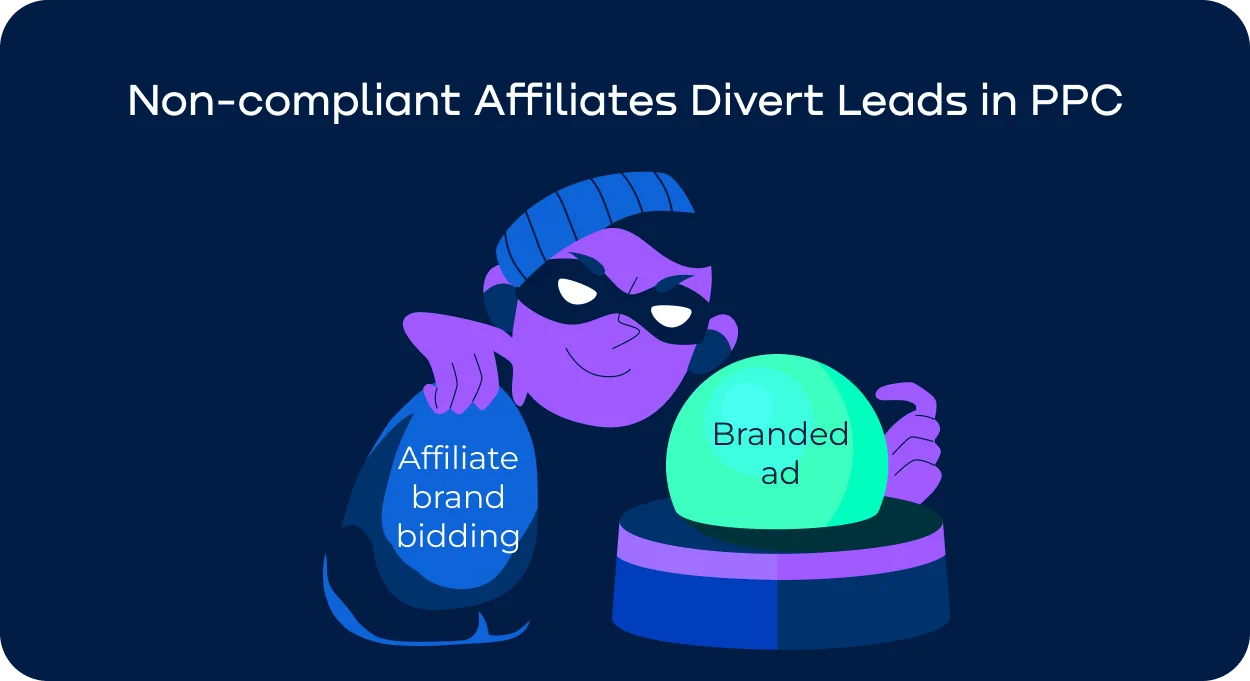
Not all traffic is equal. This step combines PPC analysis and attribution check to assess partner behavior against policy and performance expectations.
Key checks:
-
• Risk scoring. Assign a risk score based on traffic quality, consistency, and known red flags (e.g. frequent spikes, low conversion ratios).
-
• Outdated codes. Identify affiliate links and codes that are no longer relevant or are routed improperly.
-
• Self‑referral checks. Detect partners who might be self‑referring or creating artificial conversions, undermining program rules and affecting your ROI.
-
• Compliance. See if affiliates promote your product according to guidelines. Mark instances of unauthorized brand bidding, ad hijacking, and impersonation for enforcement.
Step 5: Offer, Landing Page & Conversion Audit
Audit affiliate marketing content on landing pages to determine whether affiliate messaging complies with your guidelines and doesn’t undermine conversion.
Key considerations:
-
• Landing pages load correctly and reflect the offer advertised
-
• Content accurately describes benefits or incentives
-
• Auto‑apply offers or coupon codes function as intended
-
• Promotional messaging does not mislead customers
Step 6: KPI, Reporting & Forecasting
Once performance, tracking, and partner behavior are reviewed, audit your core KPIs:
-
• Conversion rate
-
• Earnings per click
-
• Cost per acquisition (CPA) vs paid channels
-
• Revenue per affiliate
-
• Return on spend
Industry benchmarks provide context for evaluation. Average affiliate program conversion rates tend to range from 3% to 5%, with average click-through rates of around 0.7–1.2% (Affiliate Help Center, 2025). These figures can serve as reference points when assessing current performance in your affiliate program.
You should also compare current affiliate performance against historical data, industry norms, and parallel channels. This helps distinguish outliers from systematic issues.
Practical Post-Audit Optimization
Post-audit optimization ensures your program evolves in alignment with performance, compliance, and strategic goals. In this segment we list ideas for how you can apply the insights you gained from an affiliate marketing audit.
Commission Adjustments
Audit findings often reveal discrepancies in partner performance. Optimizing commissions can improve ROI and incentivize high-quality traffic.
Here’s what you can do:
-
• Reward top performers: Increase rates for affiliates consistently delivering high-quality conversions.
-
• Adjust underperformers: Lower or restructure payouts for affiliates generating low-value traffic or frequent compliance issues.
Program Redesign
Sometimes audits uncover structural issues in the affiliate program itself. Post-audit redesign may include:
-
• Reevaluating tiers and incentives: Introduce clear performance tiers, bonuses, or contests to motivate affiliates.
-
• Updating tracking or attribution rules: Ensure your affiliate tracker accurately captures all conversions and rewards legitimate traffic.
-
• Optimizing offers and landing pages: Remove underperforming creatives, test new copy, or refine promotional materials to maximize conversions.
-
• Closing low-value partnerships: Eliminate affiliates that consistently generate poor traffic or violate policy.
Enforcement
A critical component of post-audit optimization is enforcing program rules. Effective enforcement helps maintain program integrity, reduces revenue leakage, and reinforces the importance of compliance among partners.
-
• Document violations clearly: Keep detailed records of any policy breaches, fraud instances, or non-compliant behavior discovered during the audit.
-
• Communicate: Notify the offending partner or their manager about the issue, using evidence and references to the relevant program rules or agreements.
-
• Apply appropriate consequences: Actions may include withholding commissions, suspension, or terminating agreements for repeated violations.
-
• Track enforcement outcomes: Monitor compliance after intervention to ensure that violations do not recur, and that corrective actions are effective.
Conclusion
An affiliate marketing audit is a strategic tool that enhances performance, safeguards against fraud, and ensures program integrity. By systematically reviewing partner activity, tracking accuracy, content quality, and payout structures, organizations gain actionable insights that directly impact ROI and cost efficiency.
Adopting a continuous improvement mindset transforms audits from a reactive measure into a proactive growth engine and maximizes the value of affiliate programs.
FAQ
What is an affiliate tracker, and why does it matter?
It is software that captures clicks, assigns conversions to specific publishers, and links revenue back to the correct source through cookies or server-to-server events. A reliable affiliate marketing tracker ensures attribution accuracy, highlights discrepancies between systems, and flags unusual patterns that may indicate abuse. Without this infrastructure, any affiliate marketing audit becomes guesswork rather than evidence-based analysis.
How does an affiliate marketing content audit improve program results?
It evaluates how partners present your brand across landing pages, blogs, PPC ads, coupon portals, and comparison sites.
This review typically focuses on:
-
• Accuracy of product claims
-
• Alignment with current offers and pricing
-
• Proper disclosure and brand representation
-
• Consistency between promotional messaging and landing page experience
When done regularly, an affiliate marketing content audit reduces conversion leakage caused by misleading or outdated promotions. It also prevents reputational risk.
What is affiliate policy monitoring?
It is a continuous control process designed to ensure partners operate within program rules.
It includes:
-
• Tracking promotional placements and traffic sources
-
• Scanning affiliate content for rule violations
-
• Detecting unauthorized brand bidding or coupon misuse
-
• Using automated alerts from affiliate tracking software and monitoring tools
When affiliate policy monitoring is combined with structured audits and strong tracking data, brands move from reactive enforcement to proactive risk management. The result is a healthier partner ecosystem and more predictable program performance.

Check if Your Competitors Bid on Your Brand