
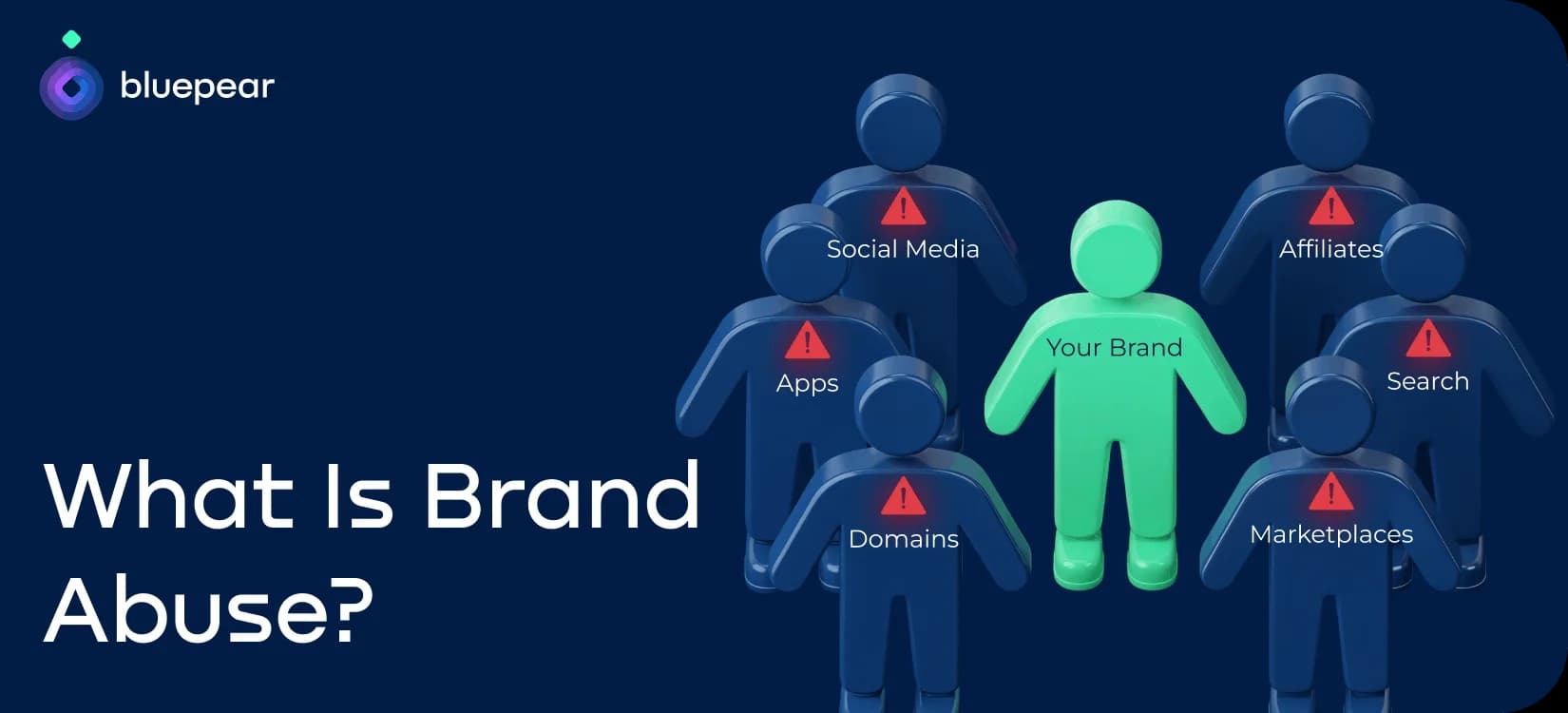
Every year, businesses invest millions in building brand awareness and customer trust. Yet it only takes one fake website, one unauthorized PPC campaign, or one affiliate violating program rules to start diverting traffic and revenue elsewhere.
This is brand abuse — a broad category of threats that exploit your reputation for someone else's gain. In this guide by Bluepear’s brand protection specialists, you'll learn how to recognize its different forms and how to build a practical monitoring strategy before minor violations turn into larger business risks.
What Is Brand Abuse?
In a broad sense, it is the unauthorized use of a company's brand, trademarks, reputation, or other brand assets for someone else's benefit.
In this guide we’ll focus on online brand abuse, where attackers use unauthorized search ads, fake websites, affiliate policy violations, misleading coupon pages, impersonation, cybersquatting, and other tactics to capture traffic or exploit customer trust.
The motivations vary, but they typically fall into one of the several categories:
-
• Generating profit from a brand's existing reputation and customer demand.
-
• Selling counterfeit or unauthorized products.
-
• Stealing customer credentials or payment information.
-
• Redirecting users to competitors.
-
• Earning unauthorized affiliate commissions by intercepting branded traffic.
Online brand abuse continues to expand. According to APWG, the number of recorded phishing attacks increased from 853,244 in Q4 2025 to 971,181 in Q1 2026 — a 13.8% increase in a single quarter. At the same time, Akamai reports that 68% of counterfeit domains targeting financial institutions are phishing sites designed to steal customer credentials, highlighting how brand impersonation has become a core tactic for cybercriminals.
.
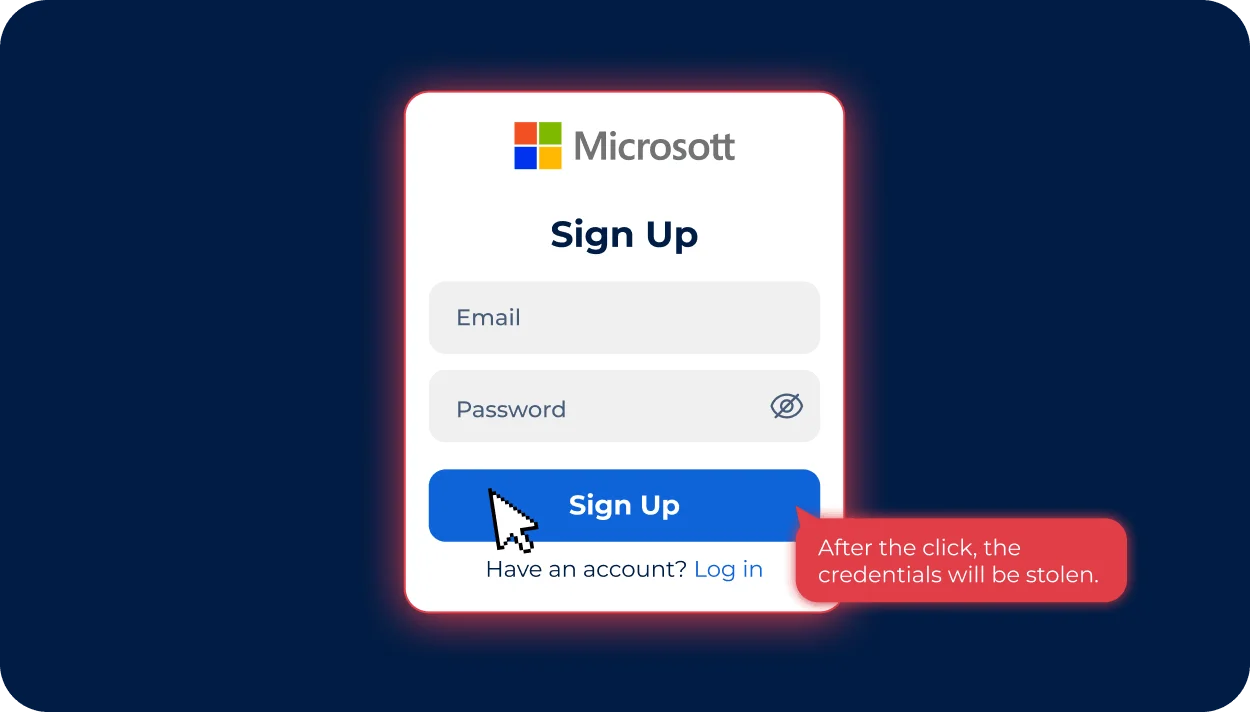
Digital channels make these tactics inexpensive, scalable, and difficult to detect manually. Today, domains can be registered in minutes. AI-generated websites can make convincing copies of legitimate brands with minimal effort. This allows attackers to launch impersonation campaigns and fake brand pages at scale. Statistics reflect this: NetBeacon's Measurement and Analytics Platform (MAP) recorded a 63% month-over-month increase in phishing infrastructure in March 2025, identifying 47,613 unique phishing domains.
Many schemes also disappear or change before manual checks can identify them, making continuous brand abuse monitoring increasingly important.
Common Types of Online Brand Abuse
The table below summarizes the most common types and how they differ:
| Type | Main Goal | Typical Victim | Example |
|---|---|---|---|
| Trademark infringement | Misuse brand identity | Business | Unauthorized logo or trademark use |
| Cybersquatting | Capture traffic | Customers | Look-alike domain |
| Affiliate fraud | Earn commissions | Advertiser | Unauthorized PPC ads |
| Ad hijacking | Divert paid traffic | Advertiser | Competitor or affiliate outranks branded ads |
| Fake websites | Steal credentials | Customers | Fake login or checkout page |
| Counterfeit products | Sell fake goods | Customers | Fake marketplace listing |
| Social impersonation | Gain trust | Customers | Fake customer support account |
Trademark Infringement
Trademark infringement occurs when someone uses a protected trademark without authorization in a way that may confuse customers. This can include company names, logos, product names, slogans, or other registered brand assets. The goal may be to attract traffic, promote competing products, or create the impression of an official relationship with the brand.
Perpetrators range from unauthorized resellers and counterfeit sellers to competitors and fraudulent operators.
Example: A seller creates a marketplace listing using a registered logo and official product images to promote products that are not authorized by the brand.
Cybersquatting and Look-Alike Domains
Cybersquatting involves registering domain names that closely resemble a legitimate brand. Attackers may replace letters, add extra words, use different domain extensions, or exploit common typing mistakes to capture visitors.
These domains are commonly used to redirect traffic, display misleading advertisements, distribute malware, or host phishing pages that imitate legitimate websites.
Cybercriminals, domain speculators, and affiliate marketers may all use this tactic.
Example: Instead of the official login page of an established brand, users are directed to a copycat phishing site.
If you'd like to learn more about identifying these threats, see our guide on fake websites targeting your brand.
Brand Bidding and Ad Hijacking
Brand bidding and ad hijacking occur when advertisers bid on branded keywords without authorization to intercept high-intent traffic. The ads may promote competing products, unauthorized resellers, or affiliate landing pages.
Some advertisers use dynamic keyword insertion or misleading ad copy to appear as the official brand, increasing the likelihood that users will click their ads instead.
Example: A customer searches for your company name but clicks on a paid ad from an unauthorized affiliate that redirects through tracking links.
Affiliate Fraud and Unauthorized Affiliates
Affiliate fraud occurs when partners violate program rules to generate commissions they did not legitimately earn. Typical tactics include brand bidding, cookie stuffing, misleading coupon sites, unauthorized redirects, and trademark misuse designed to capture conversions that would likely have occurred anyway.
Example: An affiliate runs PPC ads targeting your brand name, intercepts customers already searching for your business, and claims commission for conversions that originated from branded search.
Marketplace Abuse and Counterfeit Products
Unauthorized sellers or fraudulent merchants may list counterfeit products, misuse trademarks, copy official product descriptions, or falsely claim to be authorized distributors. Beyond lost revenue, counterfeit listings can generate poor customer experiences that ultimately damage brand reputation.
Example: A marketplace seller uses your product photos and branding to advertise counterfeit goods at unusually low prices.
Social Media Impersonation
Social media impersonation involves creating fake accounts that imitate a legitimate business, executive, or customer support team. Attackers often copy profile images, company descriptions, and branding to appear authentic. These accounts may respond to customer questions, promote fraudulent offers, request payments, or direct users to phishing websites. Impersonation is commonly carried out by scammers seeking financial gain or customer data.
Example: A fake customer support profile contacts users who mention your brand and asks them to verify their account through an external website.
Fake Mobile Apps
Fraudulent mobile applications imitate legitimate brands to steal credentials, collect personal information, distribute malware, or generate advertising revenue. Attackers often copy official names, logos, screenshots, and descriptions to make fake apps appear trustworthy in app stores or third-party download sites.
Cybercriminals typically publish these apps during periods of high customer demand, such as product launches or seasonal campaigns.
Example: A fake banking app closely resembles the official application but captures users' login credentials instead of providing legitimate services.
How It Affects Businesses and Customers
The impact extends far beyond isolated security incidents. While businesses often bear the financial and operational costs, customers are the ones who face direct fraud and security risks.
For Businesses
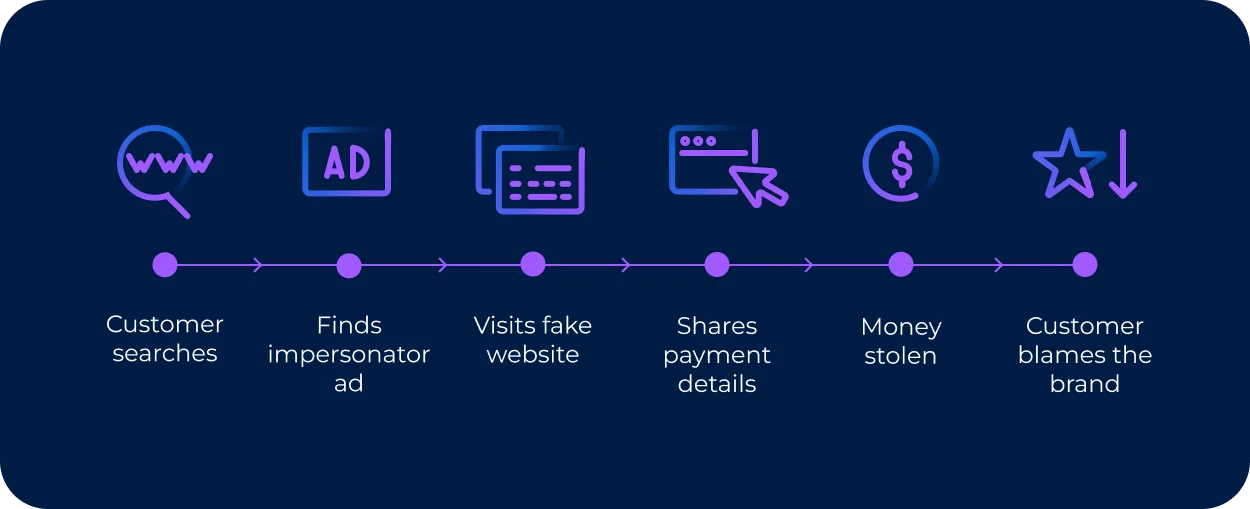
Multiple teams can be affected at the same time — from marketing and affiliate management to legal, compliance, and customer support.
- 1. Loss of customer trust: Even when the business is not directly responsible, customers who experience fraud associated with a brand may hesitate to return. Rebuilding that trust can take significantly longer than preventing the incident in the first place.
- 2. Lost revenue: When unauthorized ads, fake websites, or counterfeit listings intercept customers, legitimate sales are diverted elsewhere. Businesses lose conversions while bad actors profit from traffic generated by the brand's own marketing efforts.
- 3. Higher advertising costs: Brand bidding, ad hijacking, and unauthorized affiliate campaigns increase competition for branded keywords. This often drives up CPCs and forces advertisers to spend more to maintain visibility for searches they would otherwise dominate.
- 4. Trademark dilution: Repeated unauthorized use of trademarks across websites, marketplaces, advertisements, and social platforms can weaken brand distinctiveness and make enforcement more difficult over time.
- 5. Higher customer support costs: Teams frequently devote time and effort on support requests related to suspicious emails, fake promotions, unauthorized charges, or orders customers never received.
Legal and enforcement expenses: Using brand abuse monitoring tools, investigating abuse, issuing takedown requests, enforcing trademark rights, and pursuing legal action all require time and resources.
For Customers
Customers are often the primary targets because they already trust the brands they recognize.
- 1. Fraud: Attackers use trusted brand names to convince customers to make purchases, transfer money, or interact with fraudulent offers they would otherwise ignore.
- 2. Identity theft: Fake login pages and phishing campaigns can capture usernames, passwords, and personal information, allowing attackers to take over customer accounts or commit identity fraud.
- 3. Stolen payment information: Counterfeit stores and fraudulent checkout pages are designed to collect credit card details and other financial information under the appearance of a legitimate transaction.
- 4. Malware infections: Fake websites, malicious advertisements, and fraudulent mobile apps may install malware that compromises devices or steals additional sensitive information.
Brand Abuse Detection: How to Identify Threats Early
Some of the most common early warning signs include:
| Warning Sign | Possible Abuse |
|---|---|
| Sudden increase in branded CPCs | Brand bidding or ad hijacking |
| Unexpected growth in affiliate-attributed sales | Affiliate fraud |
| Customer reports of suspicious websites or emails | Fake websites or phishing |
| Trademark complaints or reports of unauthorized logo use | Trademark infringement |
| Unknown coupon codes appearing online | Coupon abuse by unauthorized affiliates |
Not every signal confirms fraudulent activity, but each deserves investigation. For example, a rise in branded CPCs may indicate increased competition — or it could mean unauthorized affiliates are bidding on your trademark. Similarly, an unexpected spike in affiliate conversions may reflect a successful campaign, but it can also result from partners intercepting branded traffic that would have converted organically.
Many organizations miss these violations because monitoring responsibilities are spread across multiple teams. Marketing focuses on campaign performance, affiliate managers review partner results, legal teams handle trademark issues, and customer support receives fraud reports. Without a unified brand abuse protection process, these signals often remain disconnected.
Hidden abuse can also be difficult to detect manually. A fraudulent PPC campaign may only appear in certain locations or at specific times of day. A fake website may target users in one country while remaining invisible elsewhere. Unauthorized affiliates may pause campaigns during routine audits and resume them afterward.
For this reason, many organizations combine regular audits with continuous brand abuse monitoring and automated brand abuse scans across search results, domains, affiliate traffic, and other digital channels. Detecting abuse early gives businesses more time to remove violations before they escalate into financial losses, customer fraud, or reputational damage.
Brand Abuse Monitoring Across Digital Channels
Because online brand abuse appears across multiple platforms, monitoring a single channel is rarely enough. A competitor may bid on your trademark in search results, an affiliate may violate PPC rules, while a phishing campaign targets customers through a newly registered domain — all at the same time.
An effective monitoring strategy combines visibility across the digital ecosystem rather than treating each channel separately.
| Channel | What to Monitor | Typical Abuse |
|---|---|---|
| Google Search | Ads | Brand bidding, ad hijacking |
| Domains | New registrations | Cybersquatting |
| Affiliates | PPC activity | Affiliate fraud |
| Marketplaces | Listings | Counterfeit products |
| Social Media | Accounts | Impersonation |
Monitoring should also account for how abuse is delivered. Many bad actors deliberately limit their visibility by changing what different users see. Common evasion techniques include:
-
• Geo-targeting, where abusive ads or websites appear only in selected countries or regions.
-
• Device targeting, showing different content to desktop and mobile users.
-
• Time scheduling, running campaigns only during specific hours to avoid manual checks.
-
• Cloaking, where review systems and monitoring tools see legitimate content while real users are redirected elsewhere.
These techniques make manual reviews unreliable. A quick search from one location or device may completely miss an active violation. Regular brand abuse scans across different search environments help uncover threats that would otherwise remain hidden.
How Brand Abuse Monitoring Software Helps
As brands expand, manual monitoring becomes significantly more difficult as some violations may only appear in specific countries, on certain devices, or during limited time windows.
Bluepear helps automate brand abuse monitoring by continuously checking search results across multiple search engines and locations. Instead of relying on occasional manual searches, teams receive ongoing visibility into activity that may affect their brand.
With Bluepear, organizations can:
-
• Detect unauthorized brand bidding and ad hijacking in paid search.
-
• Monitor affiliate PPC activity and identify potential policy violations.
-
• Track coupon and review websites for unauthorized promotions.
-
• Capture SERP screenshots, redirect chains, and other evidence for compliance investigations.
-
• Receive alerts when new violations appear, enabling faster response.
-
• Compare results across countries, devices, search engines, and time periods to uncover abuse that would otherwise remain hidden.
This approach makes brand abuse detection more consistent while reducing the amount of manual work required from marketing, affiliate, compliance, and legal teams.
Sign up for a free trial period to identify suspicious activity early and investigate it with supporting evidence.
Brand Abuse Protection: Best Practices
Bluepear’s brand protection specialists compiled this list of practices that have the greatest impact:
- • Protect your trademarks: Register trademarks in the markets where you operate and define clear guidelines for how your brand can be used by partners, resellers, and affiliates. Legal protection provides a stronger foundation for enforcing your rights when violations occur.
- • Monitor affiliate activity: Review affiliate traffic regularly to identify unauthorized PPC campaigns, trademark bidding, misleading promotions, and coupon abuse. Clear program policies are important, but they should be supported by continuous monitoring to ensure partners follow them.
- • Watch for suspicious domains: Monitor newly registered domains that resemble your brand name, including common misspellings, alternative domain extensions, and look-alike variations. Early brand abuse detection can help prevent phishing campaigns, cybersquatting, and other forms of impersonation before they attract significant traffic.
- • Educate customers: Teach customers how to recognize your official website, social media accounts, and communication channels. Encourage them to report suspicious websites, emails, or support accounts claiming to represent your business. Customer awareness can become an additional layer of defense.
- • Respond quickly to abuse: Establish clear procedures for investigating, collecting evidence, submitting takedown requests, and coordinating responses across internal teams. Fast action can reduce financial losses and limit reputational damage.
- • Build a brand abuse protection strategy: Comprehensive brand protection helps businesses detect threats earlier, respond more efficiently, and reduce the long-term negative impact.
To find out how you can apply these practices and turn them into an effective strategy for your business, read our guide on digital brand protection.
Conclusion
Some incidents are easy to spot, such as counterfeit listings or fake support accounts. Others — like unauthorized brand bidding, affiliate fraud, or geo-targeted ad hijacking — can remain hidden for months while gradually increasing advertising costs or diverting valuable traffic. The first step toward effective brand abuse protection is understanding where risks appear and monitoring the digital channels where violations are most likely to occur.
FAQ
What is brand abuse?
It is the unauthorized use of a company's trademarks or other brand assets for someone else's benefit.
Why is brand abuse dangerous?
It can reduce revenue, increase advertising costs, damage brand reputation, expose customers to fraud, and create additional legal and operational expenses. Left undetected, it can also weaken customer trust over time.
How can you detect brand abuse?
Effective brand abuse detection combines continuous monitoring of search results, domains, affiliate activity, marketplaces, coupon sites, and social media with alerts and evidence collection. Investigating early warning signs can help identify abuse before it escalates.
How can you prevent brand abuse?
The most effective approach combines trademark protection, affiliate compliance, domain monitoring, customer education, rapid incident response, and continuous brand abuse monitoring.
What is the difference between trademark infringement and brand abuse?
Trademark infringement is a legal concept that refers to unauthorized use of a protected trademark in a way that is likely to confuse consumers. Brand abuse is broader. It includes trademark violations but also covers activities that may not always violate trademark law while still harming a business. For example, affiliates bidding on branded keywords against program rules, misleading review sites, or deceptive landing pages can damage marketing performance even when they don't result in a trademark claim.
What tools detect brand abuse?
The right solution depends on where abuse occurs. For brands primarily concerned with search visibility, unauthorized PPC ads, ad hijacking, and affiliate compliance, platforms like Bluepear provide brand abuse protection in search results across multiple search engines, locations, devices, and time periods. This helps teams detect violations earlier and collect evidence for faster investigation and enforcement.
How does AI detect brand abuse?
AI helps analyze large volumes of data across digital channels to identify patterns that may indicate abuse. Depending on the solution, AI-driven brand abuse scans can detect look-alike domains, unauthorized ads, counterfeit listings, impersonation attempts, unusual affiliate behavior, or emerging threats that would be difficult to identify through manual reviews alone. AI supports faster detection, but human review remains important for validating findings and determining the appropriate response.

Detect Abuse in Search and PPC