

Contents
For many ecommerce brands, customer acquisition is hard to scale profitably. Paid advertising costs continue rising, organic visibility is more competitive than ever, and relying on a single acquisition channel creates long-term risk. That is why more companies are investing in affiliate marketing as a scalable performance channel built around partnerships, creators, publishers, and niche communities.
However, affiliate marketing for ecommerce involves far more than offering commissions. Brands need the right tracking infrastructure, clear compliance policies, effective recruitment strategies, and ongoing optimization to prevent fraud, attribution conflicts, and wasted spend.
In this guide, we share our experts' insights on how ecommerce affiliate marketing works, how to build and scale affiliate programs effectively, and how affiliate strategies differ across industries.
What Is Affiliate Marketing for Ecommerce?
It is an advertising model where partners promote services and products in exchange for commissions. What makes ecommerce affiliate marketing attractive is its performance-oriented nature. Instead of paying for visibility alone, ecommerce brands pay for measurable actions — sales, subscriptions, or qualified leads.
Here’s a simple explanation of how online affiliate marketing works:
-
1. A brand finds partners who promote products through their own channels.
-
2. Using affiliate program software, the brand tracks conversions, manages payouts, monitors compliance, and evaluates performance.
-
3. When a user clicks an affiliate link and makes a purchase or completes other predefined actions, the responsible partner receives a commission according to the payment model they agreed to.
For some ecommerce companies, affiliate programs become one of the largest customer acquisition channels:
-
• Impact.com reports that 74% of brands generate between 11 and 30% of their total revenue from affiliate marketing.
-
• PMA’s 2025 Industry Study reveals that affiliates account for an estimated 15-20% of sales for companies that leverage affiliate marketing strategies.
Others use it to support SEO, influencer marketing, and paid search efforts. The right approach depends on factors like the product category, margins, audience behavior, and the maturity of the partner program itself.
Benefits and Risks of Affiliate Marketing for Online Businesses
For ecommerce companies operating in increasingly competitive acquisition environments, ecommerce affiliate marketing creates important advantages:
- 1. Lower-risk customer acquisition: Affiliate marketing doesn’t require upfront spending. Brands pay only for actual conversions or other predefined actions, which reduces acquisition risk and makes testing new audiences easier.
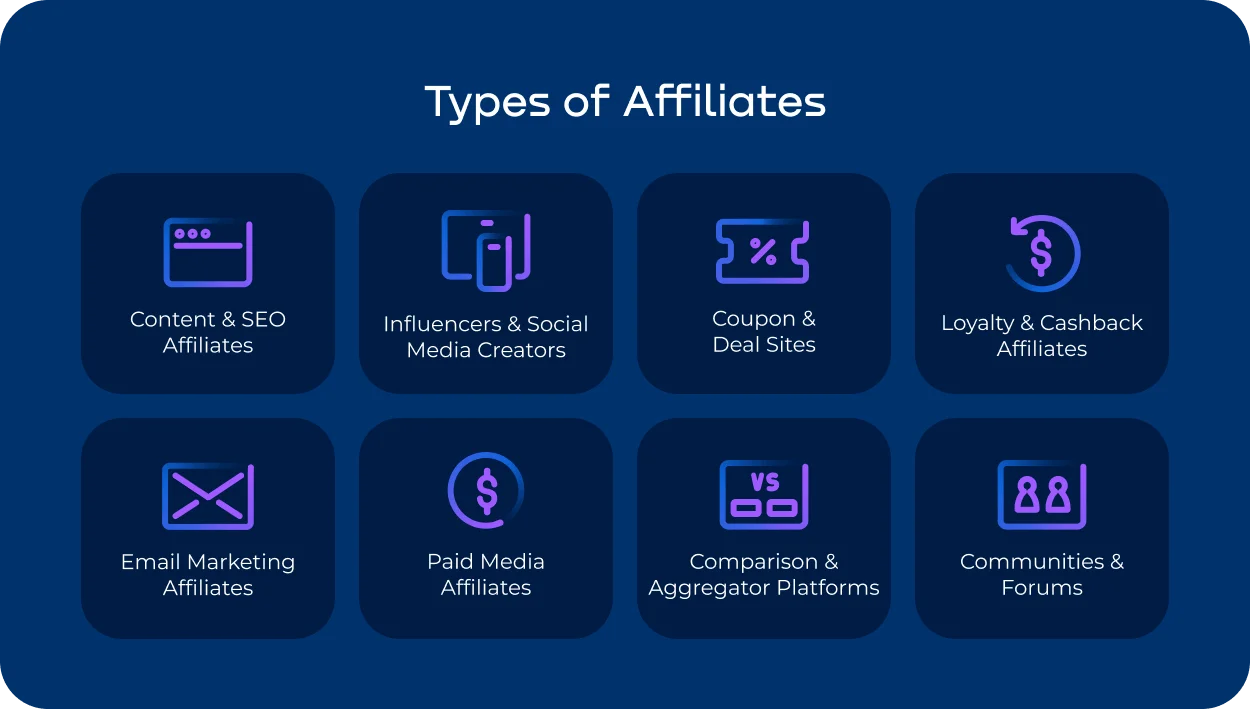
- 2. Scalability across channels: A single ecommerce partner program can include SEO publishers, influencers, TikTok creators, review websites, coupon platforms, and cashback communities. This diversification reduces dependence on any single traffic source.
- 3. Access to niche audiences and trusted communities: According to IZEA’s 2024 report, 77% of consumers prefer influencer-created content over traditional advertising formats. That suggests that consumers often trust creators and niche publishers more than traditional ads. That is why beauty affiliate programs frequently rely on UGC creators and influencers, while health and wellness affiliate programs tend to work with educational publishers.
However, affiliate marketing also introduces risks that brands should manage carefully:
- 1. Affiliate fraud and commission cannibalization: Some affiliates may use misleading tactics and unauthorized traffic acquisition methods that reduce profitability.
- 2. Compliance and reputation risks: In regulated industries like pharmacy, affiliates may use non-compliant messaging or misleading promotional claims.
- 3. Attribution complexity: As affiliate programs scale across channels and devices, tracking and attribution become harder to manage without dedicated software.
How to Start an Ecommerce Affiliate Marketing Program
1. Define Your Goals and Payment Model
The first step is deciding what your partner program is actually supposed to achieve.
Some brands use affiliate partnerships primarily for customer acquisition. Others focus on expanding brand visibility, entering new markets, increasing subscription retention, or supporting product launches.
Those goals directly influence how the commission structure should be designed.
For example,
-
• Low-margin ecommerce products often use CPA-based payouts.
-
• High-margin DTC brands may offer revenue share commissions.
-
• Subscription businesses frequently rely on hybrid models.
-
• SaaS models sometimes include recurring commissions.
At this stage, brands should also define:
-
• Target customer acquisition cost ranges
-
• Commission percentages
-
• Attribution windows
-
• Cookie duration
-
• Payout schedules
-
• Performance incentives
The commission structure has a major impact on affiliate recruitment. Experienced high-performing affiliates evaluate programs based not only on payout size, but also on long-term earning potential.
2. Choose Affiliate Program Software
Even relatively small programs can be difficult to manage manually. Especially once multiple affiliates, traffic sources, payout models, and attribution rules are involved.
Most brands need two categories of software: affiliate trackers and compliance tools.
-
- Affiliate trackers help understand which affiliates generate more conversions and how commissions should be attributed.
-
- Compliance tools like Bluepear are used to detect program policy violations and maintain cleaner attribution.
When choosing an affiliate tracker, focus on several things:
-
• Attribution accuracy
-
• Integration with ecommerce platforms
-
• Recurring commission support
-
• Payout automation
-
• Scalability across countries and currencies
Health and wellness affiliate programs usually need subscription and recurring payment tracking, while beauty affiliate programs may rely heavily on influencer promo codes and social attribution.
As for compliance tools, look for:
-
• Multiple search engines, countries, and languages support
-
• High scanning frequency
-
• Hidden PPC violation monitoring
-
• Coupon monitoring
-
• Clear reporting with screenshots, affiliate IDs, redirects, etc.
A good example of a compliance tool for ecommerce affiliate marketing is Bluepear, which combines flexible configuration and detailed reporting in one platform. Brands can test it with a free 7-day trial before deploying it across their affiliate program.
3. Create Affiliate Terms and Policies
Clear rules help prevent conflicts before they happen. Without defined policies, affiliates may promote the brand in ways that damage margins, create attribution issues, or compete directly with internal acquisition channels. Well-structured policies protect both the merchant and legitimate affiliates who want stable, long-term partnerships.
Affiliate terms should clarify:
-
• Approved traffic sources
-
• PPC bidding restrictions
-
• Trademark usage
-
• Coupon policies
-
• Email marketing rules
-
• Social promotion guidelines
-
• Prohibited advertising practices
Clear policies are especially important for regulated verticals. Pharmacy affiliate programs require strict compliance language and limitations around promotional claims. Health and wellness affiliate programs may also need tighter oversight.
| Policy Area | Example of Policy Language | How to Detect Violations | Common Response |
|---|---|---|---|
| Trademark Bidding | "Affiliates may not bid on branded keywords or misspellings in PPC campaigns." | Search monitoring, PPC scans, ad copy tracking | Warning, commission reversal, suspension |
| Coupon Usage | "Unauthorized coupon distribution is prohibited." | Coupon monitoring, affiliate traffic analysis | Coupon deactivation, payout denial |
| Email Marketing | "Affiliates may not send promotional emails without prior approval." | Spam reports, traffic source reviews | Removal from the program |
| Misleading Claims | "Affiliates may not make unsupported medical or performance claims." | Content monitoring | Immediate takedown request |
4. Build a Recruitment Strategy
Recruitment is usually what determines whether ecommerce affiliate marketing can become a meaningful acquisition channel.
A strong affiliate recruitment strategy starts with identifying the types of partners most aligned with the brand’s audience and business model. Different channels work better for different ecommerce categories.
For example:
-
• Beauty affiliate programs usually perform best with TikTok creators, Instagram influencers, and YouTube reviewers.
-
• Health and wellness affiliate programs tend to rely on SEO publishers, educational blogs, and fitness-oriented creators.
-
• Pharmacy affiliate programs work best with coupon sites, comparison platforms, and trusted informational publishers.
Instead of recruiting as many affiliates as possible, focus on affiliates already ranking, publishing, or advertising around your category.
When evaluating affiliates, look beyond traffic size. Focus on:
-
• Audience relevance
-
• Search intent
-
• Content quality
-
• Engagement
-
• Conversion potential
Smaller niche affiliates can outperform large publishers because their audiences trust recommendations more and convert at higher rates.
Outreach also matters. The highest response rates usually come from personalized outreach that explains:
-
• Why the partnership fits the affiliate’s audience
-
• Expected commission potential
-
• Conversion rates or EPC data
-
• Available creatives and promo support
Affiliates tend to favor the brands that provide exclusive offers, performance insights, and transparent communication.
How to Manage and Scale an Affiliate Program
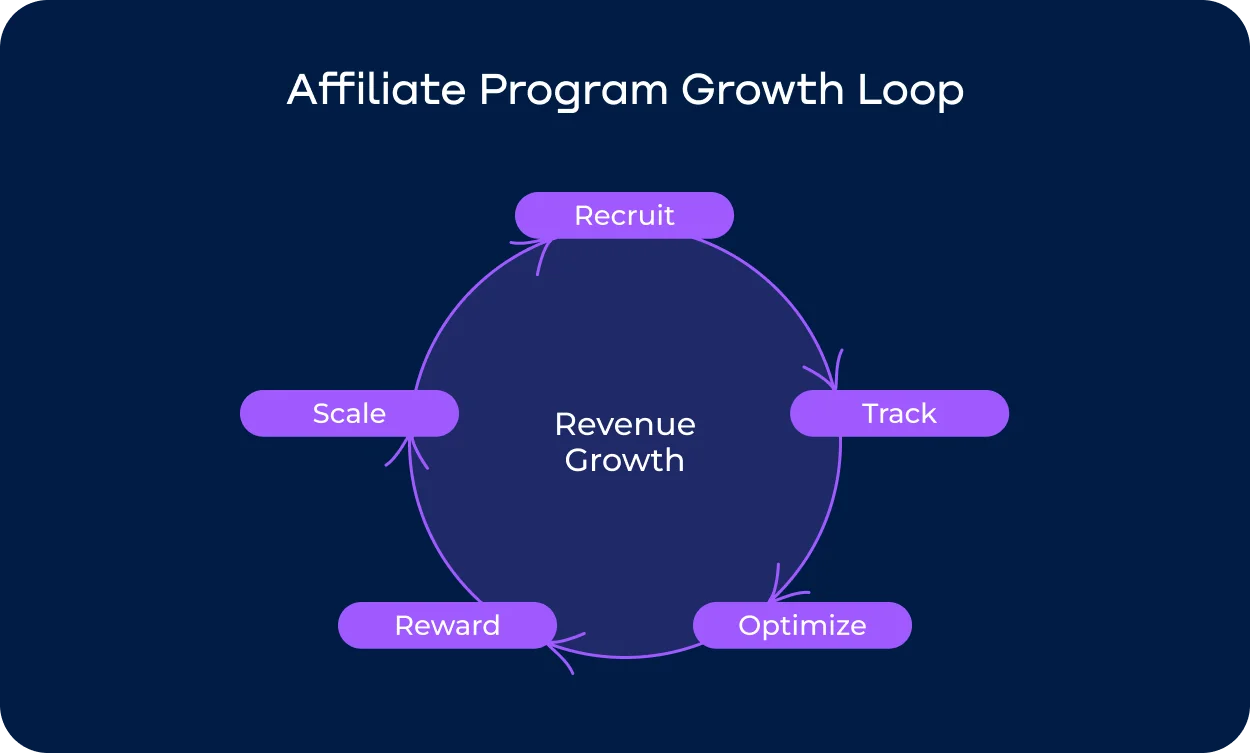
As more affiliates join the ecosystem, traffic sources diversify, attribution paths overlap, and compliance risks increase. Long-term growth depends on how effectively the program is managed, monitored, and optimized over time.
Tracking and Attribution
Reliable tracking is a necessity for affiliate marketing for ecommerce. Customers often interact with multiple channels before purchasing. Without tracking and clear attribution guidelines, multiple affiliates may claim the same conversion.
The commission models most common in online affiliate marketing are CPA, revenue share, and hybrid:
| Model | What it means | Best For |
|---|---|---|
| CPA | Fixed payout per sale | Low-margin products |
| Revenue Share | Percentage of order value | Ecommerce brands |
| Hybrid | Combination of CPA and revenue share | Subscription products |
Each model creates different motivations for affiliates. Some are a better fit for certain niches. For example, beauty affiliate programs often rely on percentage-based commissions because average order values vary significantly. Subscription-driven health and wellness affiliate programs may prioritize hybrid payment models that reward both initial conversions and recurring payments. CPA models are predictable and comparatively easy to budget, which is why they are commonly used in pharmacy affiliate programs as well as other tightly controlled verticals.
Fraud Prevention and Compliance
Not every affiliate issue is malicious, but unmanaged programs often attract:
-
• Trademark bidding violations
-
• Unauthorized PPC campaigns
-
• Cookie stuffing
-
• Fake leads or low-quality traffic
-
• Coupon abuse
-
• Misleading promotional claims
These problems are especially common for large programs with ongoing partner recruitment.
In highly regulated industries, compliance becomes even more important. Pharmacy affiliate programs often require strict oversight of promotional messaging, while health and wellness affiliate programs may need additional monitoring around product claims and advertising language.
The challenge is that affiliate abuse is not always obvious immediately. Some violations slowly erode margins or create attribution conflicts over time. Others damage brand reputation directly.
Clear policies help reduce these risks, but enforcement matters just as much as documentation. Mature affiliate marketing for ecommerce combines automated monitoring tools with manual review processes. Instead of waiting for warning signs, we recommend monitoring affiliate activity proactively and maintaining cleaner attribution from the start. Sign up with Bluepear and detect affiliate policy breaches before they become expensive.

Optimizing Affiliate Performance
Teams responsible for marketing and affiliate programs usually analyze:
-
• Conversion rates by affiliate type
-
• Order value
-
• Top-performing traffic sources
-
• Device and geographic performance
-
• Customer lifetime value
-
• New vs returning customer ratios
These insights help brands identify which partnerships deserve more investment and support.
Different affiliate categories often require different optimization strategies.
For example:
-
• Influencers may respond better to exclusive offers and product launches.
-
• SEO affiliates often need updated landing pages and conversion-focused content.
-
• Coupon platforms may perform best during seasonal campaigns.
Communication also plays a major role. Merchants that provide faster support, custom promotions, and reliable payouts often receive stronger placement and more consistent visibility from affiliates.
How Affiliate Programs for Ecommerce Differ by Industry
Affiliate marketing strategies rarely work the same way across every vertical. The structure of the program, the types of affiliates involved, the reward model, and even the compliance requirements tend to differ.
Below, Bluepear’s experts shared their insights into how affiliate programs work across different industries.
Beauty Affiliate Programs
Beauty is among the most influencer-driven segments in online affiliate marketing.
Consumers discover beauty products through TikTok creators, Instagram influencers, YouTube channels, and review blogs. This makes user-generated content (UGC) a major acquisition driver. Affiliates in the beauty space frequently create tutorials, product reviews, and daily routine content that blends naturally into social platforms.
Many beauty and skincare brands operate with relatively high product margins, which allows them to offer competitive revenue-share commissions.
Some of the best beauty affiliate program examples include Sephora and Ulta Beauty. Their distinctive features are:
-
• Revenue share reward model
-
• Focus on creators and content publishers
-
• Strong reliance on tutorials and reviews
-
• Affiliate creatives and seasonal pushes
-
• High use of coupon affiliates
At the same time, the category is highly competitive. Audience fatigue, influencer saturation, and rising creator costs make differentiation increasingly important.
Health and Wellness Affiliate Programs
Health and wellness affiliate programs tend to focus heavily on education, trust, and recurring revenue.
Unlike impulse-driven ecommerce categories, wellness products often require more customer research before purchase. That is why brands like Myprotein and iHerb rely on:
-
• Fitness influencers and SEO content
-
• Wellness-oriented creators
-
• Product reviews
-
• Expert-driven content marketing
Subscription models are especially common in this vertical. Vitamins, supplements, nutrition products, and wellness services frequently depend on repeat purchases and customer retention rather than one-time transactions. Because of that, many health and wellness affiliate programs offer hybrid payment models that combine upfront CPA payouts with recurring revenue share incentives.
However, the industry also faces growing scrutiny around advertising claims. Affiliates promoting wellness products need clear compliance guidelines regarding medical statements, benefits, and promotional language.
Pharmacy Affiliate Programs
Pharmacy affiliate programs demand stricter compliance monitoring than most ecommerce categories.
In highly regulated industries like that, acquisition volume alone is rarely the primary goal. Traffic quality, advertising compliance, and customer trust usually matter more than aggressive scaling tactics.
Affiliates in pharmacy-related verticals often include healthcare-focused publishers, comparison sites, and informational medical content platforms. Influencer-heavy acquisition models are much less common compared to beauty or wellness sectors.
Some examples of what pharmacy brands like CVS and Walgreens use are:
-
• Coupon and content affiliates
-
• Restrictions around promotional claims
-
• Strict trademark and compliance controls
Because compliance risks are higher, many pharmacy affiliate programs rely on CPA-based commission structures with tightly controlled promotional rules.
Monitoring is particularly important in this space. Unauthorized advertising claims or misleading promotions can lead to both reputational and regulatory risks.
Conclusion: Ecommerce Affiliate Marketing
Affiliate marketing for ecommerce brands is a full-scale performance acquisition channel that combines influencers, SEO publishers, creators, paid media affiliates, and niche communities into one ecosystem.
Brands that treat affiliates as strategic growth partners rather than temporary traffic sources often build more resilient acquisition systems. And as paid advertising costs continue rising across major platforms, performance-based channels like online affiliate marketing remain an important part of ecommerce growth strategies.
FAQ
What is the best affiliate marketing strategy for ecommerce?
The best strategy depends on the business model, margins, and goals.
Most effective online affiliate marketing programs combine several affiliate types. A balanced partner program may include influencers, SEO publishers, review websites, and coupon platforms.
Strong programs also focus on clear attribution, reliable affiliate program software, and ongoing affiliate monitoring rather than recruitment volume alone.
How much should I pay affiliates?
Commission structures vary significantly by industry. Here’s what we can glimpse from the benchmarks published by Refgrow in 2026:
-
• Health & wellness typically pays one-time or recurring commissions with a 10-25% rate.
-
• The rate for online courses and education is 30-50%, paid once per enrollment.
-
• Fintech programs often pay flat CPA commissions ranging from $50 to $200.
-
• SaaS and software partner programs tend to offer recurring commissions in the 20–30% range.
When deciding what model and payment size to use, check what your competitors offer and consult the recent benchmarks for your niche.
Is affiliate marketing profitable for ecommerce?
Yes, ecommerce affiliate marketing can be highly profitable when managed correctly. Commissions are typically paid only after conversions occur, which reduces upfront acquisition risk compared to many traditional advertising channels.
However, profitability depends heavily on commission structure, traffic quality, and attribution accuracy. Programs without clear policies or tracking controls may struggle with fraud, duplicate attribution, or low-quality traffic.

Check Your Affiliate Program for Policy Violations