
Contents
We at Bluepear specialize in online brand monitoring. Over the years, we’ve monitored thousands of search results, ads, and affiliate campaigns to understand how brands get exploited.
Trademark misuse, brand impersonation, and unauthorized affiliate brand bidding have been around for a while now. And yet, these threats evolve and grow with each year. Protecting your brand can no longer mean simply watching for fake websites or obvious trademark infringement.
In this guide, we’ll break down the digital threats brands face in 2026, what they can actually cost, and how to build a practical online brand protection strategy that covers the places where your brand, traffic, and revenue are most exposed.
What Is Brand Protection? (Definition & Core Concepts)
At Bluepear, we define brand protection as the ongoing work of preventing unauthorized use of your brand. Marketing, affiliate, compliance, and legal teams all have a stake in it, though they often see different pieces of the same problem.
Online Brand Protection vs. Traditional Trademark Protection
Traditional trademark protection is largely about ownership and unauthorized use of intellectual property. It asks, “Is someone using our brand without permission?”
Online brand protection has a wider field of view. It also asks, “Where is it happening, who is benefiting from it, which users are being affected, and how much is it costing us?”
Why Brand Protection Matters More Than Ever in 2026
The economics of branded traffic make the answer fairly simple: your brand is an asset, and other players know it.
And the pool of people looking to monetize that asset is getting larger. Affiliate marketing alone has expanded sharply in recent years. The Performance Marketing Association reports that U.S. affiliate marketing spend grew at 14.4% annual growth rate — roughly twice the pace of e-commerce.
More money flowing through affiliate channels means more partners, more publishers, and more incentives to find gaps in program rules. A 2025 APMA survey found that 40% of brands and 48% of agencies named PPC brand bidding among their key affiliate-program concerns. Ad hijacking was another concern for 35% of brands.
The technology behind the abuse is changing, too. Automation makes it easier to generate ads, domains, landing pages, and variations at scale, while AI can help bad actors produce convincing content faster. In CSC's 2025 IP
Frontiers research, 88% of respondents said AI-enabled systems were increasing the frequency of online IP infringement, and 55% expected online infringement to rise significantly over the following three years.
So the problem in 2026 is not simply that there are more bad actors. The economics have improved for them, while automation has lowered the cost of running abuse at scale.
That makes continuous online brand monitoring and brand reputation management considerably more valuable than it was a few years ago.
The Real Cost of Ignoring Brand Protection (Statistics & Impact)
At Bluepear, we often see companies treat online brand abuse as a legal or reputational issue and overlook the direct hit to revenue. In practice, these risks overlap. A fake ad can steal a click. A counterfeit can turn a customer away. An impersonation scam can make a legitimate company look fraudulent.
Revenue Loss: How Counterfeits and Impersonation Drain Profits
Counterfeiting operates at an enormous scale. The latest OECD–EUIPO Mapping Global Trade in Fakes 2025 estimates that counterfeit goods accounted for $467 billion, or 2.3% of global imports, in 2021. While this is still the most recent comparable estimate of the global trade in fakes, newer enforcement data shows that the problem remains substantial. In the EU, authorities seized more than 112 million counterfeit items worth an estimated €3.8 billion in 2024 — more than 30% above the number of items detained in 2022 and the second-highest figure on record.
Impersonation adds another layer. In 2025, US consumers reported $3.5 billion in losses to imposter scams, nearly three times the 2020 figure. More than one million imposter-scam reports were filed with the FTC, making impersonation the most frequently reported fraud category.
Aside from direct losses, brands are also forced to pay increased brand reputation management costs to negate the damage.
Reputational Damage and Erosion of Customer Trust
When customers encounter a fake store, counterfeit product, misleading promotion, or scam, they rarely care who technically caused the problem. They remember the brand name attached to the experience.
And the trust impact can be surprisingly direct. Incopro’s research on consumer attitudes toward counterfeits found that 65% of consumers are likely to lose trust in the original brand if they know it is relatively easy to buy counterfeit products carrying that brand. Among consumers who had personally been deceived by a counterfeit purchase, 66% said they lost trust in the original brand.
The problem extends beyond counterfeit products. FTC data shows how easily brand impersonation can reach consumers through digital advertising: in 2025, more than 40% of people who lost money to a social-media scam said the scam started with an ad. Some of these scams involve websites or offers impersonating legitimate businesses.
Customers do not always distinguish between the brand and someone abusing its name. If a fake offer looks legitimate enough to trigger a purchase, the reputational damage can land on the real company. The best way to protect brand reputation is to prevent this damage, rather than dealing with the fallout after the fact.
Legal and Compliance Risks
In the US, the FTC's Government and Business Impersonation Rule prohibits materially false impersonation of businesses. The FTC reported $2.95 billion in consumer losses from impersonation scams in 2024 and has already used the rule in enforcement actions involving illegal business impersonation websites.
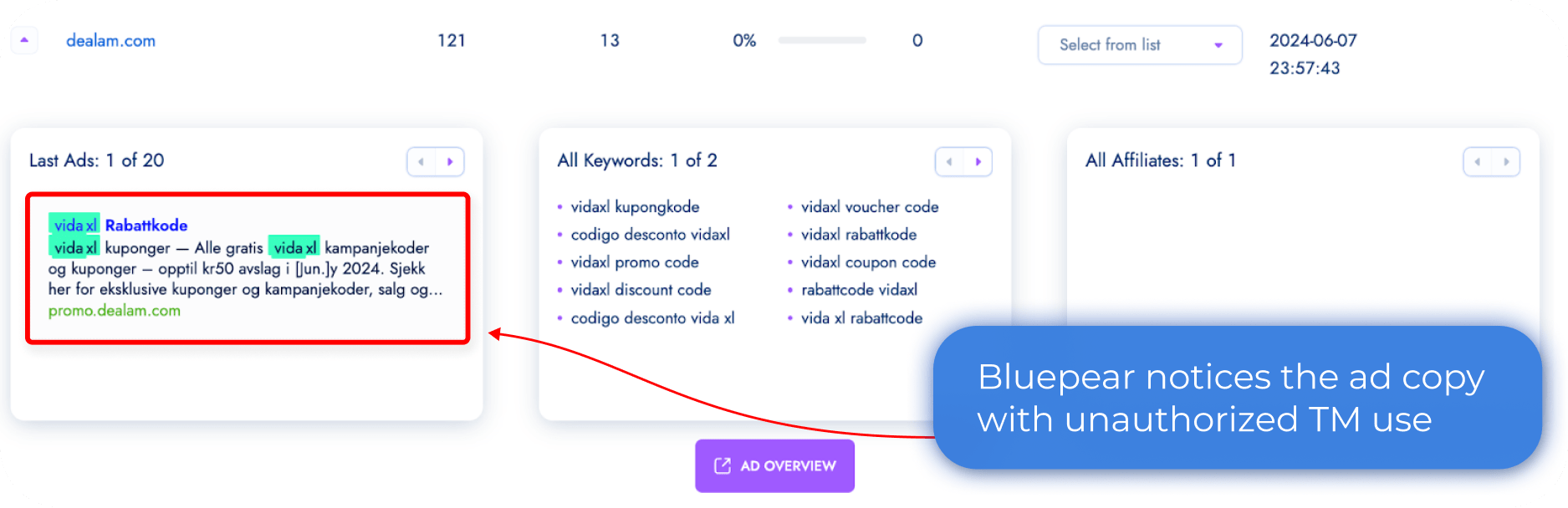
This changes the practical value of online brand protection services. Monitoring tools create a record of what happened — information that can make subsequent enforcement far more actionable. This provides brands with enough visibility to decide what needs to happen next.
10 Types of Online Brand Abuse Every Business Must Know
Online brand abuse is a collection of tactics that target different parts of the customer journey — from the first branded search to the final purchase.
At Bluepear, we see a common pattern: the more digital touchpoints a brand has, the more ways there are for someone else to monetize its name. Some attacks are obvious. Others look perfectly legitimate until you follow the link or compare the offer with the official one.
Here are the threats businesses should have on their radar to protect brand reputation.
Cybersquatting and Lookalike Domains
Cybersquatting means registering a domain that contains a brand name or trademark, often with the intention of selling it, diverting traffic, or impersonating the company. Lookalike domains go a step further by using small spelling changes, extra characters, alternative TLDs, or visually similar characters.
Risk: customers diverted to competing offers, scam pages, or sites designed to harvest credentials, creating a persistent source of confusion and reputational risk.
Phishing Websites and Fake Login Pages
A phishing site copies the appearance of a legitimate brand to make users hand over passwords, payment details, or other sensitive information.
The dangerous part is how little effort it can take to fool someone. A convincing logo, familiar layout, and a domain that looks almost right may be enough.
Risk: stolen credentials, financial losses, compromised customer accounts, and a customer who blames your brand for the experience.
Fake Social Media Accounts and Executive Impersonation
Impersonators can create fake company profiles or pretend to be executives, founders, or customer support representatives. They may use these accounts to promote fake giveaways, solicit payments, distribute malicious links, or contact customers directly.
Risk: fraud attributed to your company, loss of customer trust, and a reputation problem that can spread faster than your support team can respond.
Counterfeit Product Listings on Marketplaces
Counterfeiters can list fake products using your brand name, images, trademarks, and product descriptions. Marketplace search makes the problem worse: a customer looking specifically for your product may encounter an unauthorized seller before finding the legitimate listing.
Risk: lost sales, complaints, negative reviews, and customers associating the experience with the real brand.
Trademark Infringement in Paid Search (Brand Bidding)
Someone bids on your trademark or closely related branded keywords and appears alongside — or sometimes above — your legitimate ads.
Not every competitor or affiliate bidding on a brand term is automatically infringing; the details depend on the search engine, jurisdiction, agreements, ad copy, and how the trademark is used.
But unauthorized brand bidding can still be expensive.
Risk: higher CPCs, diverted clicks, reduced brand visibility for your own ads, and commissions paid on traffic that your brand may have generated anyway.
App Impersonation and Fake Mobile Applications
Fake apps can copy your name, logo, interface, or app-store description. Some are designed to harvest credentials or payment information; others simply redirect users to unrelated services.
Risk: accounts compromised, fraudulent transactions, poor reviews attached to your brand name, and expensive customer-support fallout.
Email Spoofing and Business Email Compromise
Email spoofing makes a message appear to come from a legitimate company or employee. Business email compromise takes this further, using compromised or impersonated accounts to request payments, change banking details, or obtain sensitive information.
Risk: direct financial losses and reputational damage.
Content Scraping and Website Cloning
Scrapers can copy product descriptions, images, articles, pricing information, or entire pages. A cloned website may then be used to impersonate the original or funnel visitors elsewhere.
Risk: duplicated content, SEO confusion, stolen intellectual property, and — in more malicious cases — a convincing fake version of your website used for fraud.
Affiliate Fraud and Brand Misrepresentation
An affiliate may bid on restricted brand keywords, create misleading ads, use unauthorized promotions, hide its affiliate ID in redirects, or present itself as the brand. In more sophisticated cases, the activity can be cloaked so that it is difficult to detect manually.
Risk: wasted PPC spend, inflated commissions, channel cannibalization, misleading customer journeys, and compliance violations.
Reputation Attacks and Fake Reviews
Fake reviews, coordinated negative ratings, fabricated complaints, and misleading posts can be used to damage brand credibility or make an unauthorized offer look legitimate.
The same tactic can work in reverse: fake positive reviews may be used to make counterfeit products or impersonation sites appear trustworthy.
Risk: distorted customer perception, lower conversion rates, weaker marketplace rankings, and additional work for teams responsible for brand reputation management.
Brand Protection Strategies: A 7-Step Framework
The framework below covers the main layers. You do not need a giant team to implement it. You do need clear ownership and enough visibility to spot abuse before it becomes expensive.
Step 1 — Register and Enforce Your Trademarks
This is the very basis of brand reputation management. Make sure your key trademarks are properly registered in the markets where you operate and sell. Define what constitutes unauthorized use, document your rights, and establish a process for collecting evidence and escalating violations.
Step 2 — Secure Your Domain Portfolio and Email Authentication
Keep a complete inventory of domains associated with your brand, including active domains, redirects, regional domains, and important variations.
Then secure your email infrastructure. SPF, DKIM, and DMARC help receiving mail systems verify whether messages claiming to come from your domain are authorized. DMARC is particularly useful because it also gives organizations visibility into authentication failures and enables enforcement policies.
Step 3 — Monitor Digital Channels 24/7
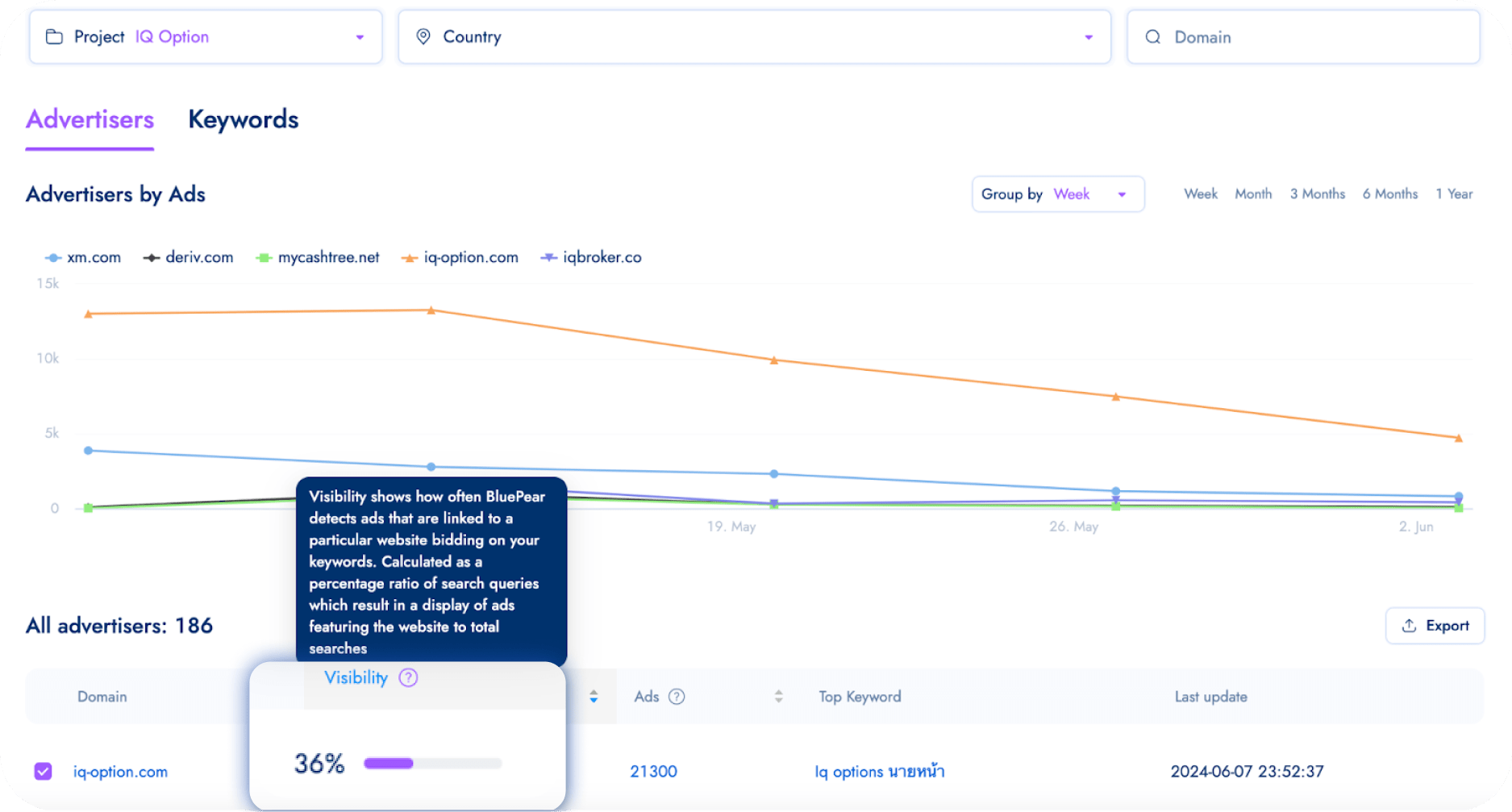
Continuous online brand monitoring helps you understand who is appearing, where, how often, and whether the behavior changes across locations or search conditions.
For compliance and affiliate teams, that creates a persistent view of brand activity that can be investigated and acted on.
Step 4 — Detect and Remove Counterfeit Listings
Monitor listings for your trademarks, product names, images, and suspicious sellers.
Prioritize cases by potential harm rather than treating every unauthorized listing as equally urgent. A counterfeit listing using your best-selling product, for example, deserves more attention than an obscure listing with little visibility.
Once identified, use the marketplace's reporting and intellectual-property procedures to request removal. Keep evidence and track repeat offenders for more effective brand reputation management.
Step 5 — Protect Paid Search and Affiliate Programs
If an affiliate is bidding on restricted keywords or presenting a misleading offer, you should be able to identify the partner, capture the evidence, and enforce compliance before you lose revenue.
Step 6 — Build a Crisis Response and Takedown Playbook
To protect brand reputation and revenue, create predefined workflows for the most common incidents.
For each type, define:
- • Who owns the case;
- • What evidence must be captured;
- • Which platform or provider receives the complaint;
- • When legal needs to get involved;
- • How the incident is escalated;
- • When the case is considered resolved.
We have seen how much time this can save. When a serious incident appears, nobody should be debating in Slack who is supposed to file the takedown request.
Step 7 — Measure What Matters: KPIs for Brand Protection
These KPIs give marketing, compliance, and legal teams a common language:
- • Violations detected: how many unauthorized incidents were found.
- • Resolution rate: how many cases were successfully removed or stopped.
- • Time to detection: how quickly the team identifies new abuse.
- • Time to resolution: how long violations remain active.
- • Unauthorized branded ad share: how often third parties appear for protected queries.
- • Affiliate compliance rate: the percentage of monitored partners following program rules.
- • Estimated wasted spend: the potential PPC cost and undeserved commissions associated with unauthorized activity.
- • Repeat violation rate: whether the same partners, domains, or sellers return after enforcement.
Brand Protection Services: How to Choose the Right Solution
Key Features to Look For
Brand protection services should fit into the way your teams actually investigate and resolve violations.
Here are the capabilities we would put on the shortlist:
- • Continuous monitoring — scheduled checks across your priority markets, keywords, and channels.
- • Evidence collection — screenshots, URLs, timestamps, redirect chains, and other context that makes each finding actionable.
- • Geographic monitoring — the same keyword can produce a very different SERP depending on the user's location. A global brand needs to see those differences.
- • Alerts and workflow — violations should reach the people responsible for them without requiring someone to keep checking a dashboard.
- • Historical data — useful for identifying repeat offenders and measuring how much enforcement actually affected behavior.
- • Reporting that ties violations to business impact — raw incident counts are less useful than knowing what happened to CPC, traffic, commissions, or conversion opportunities.
AI-Powered Detection vs. Human Review: What Works Better?
Automation is better at scale. An online brand monitoring system can check thousands of combinations of keywords, locations, affiliates, ads, and URLs far more consistently than a person can.
We at Bluepear see the most reliable model as a combination: automated detection to surface anomalies and human judgment to validate and prioritize them.
Later in this guide, we'll look at a real case showing how moving from manual checks to automated monitoring can materially change the quality and coverage of compliance results.
Top Brand Protection Solutions Providers Compared (2026)
The market is fragmented because brand protection itself covers several different problems. Some platforms specialize in trademark enforcement or counterfeit detection; others focus on paid search, affiliate compliance, or broader digital threats.
For a marketing and compliance team primarily concerned with search and partner-channel abuse, we would compare:
| Provider | Strongest fit | Where it stands out |
|---|---|---|
| Bluepear | PPC and affiliate brand compliance | Branded paid-search monitoring, affiliate violations, SERP evidence, redirect analysis, and continuous monitoring |
| BrandVerity | Affiliate and paid-search compliance | Long-established monitoring of affiliate and search marketing violations |
| The Search Monitor | Competitive intelligence and online brand protection | Search, paid media, and competitive monitoring across markets |
| BrandShield | Online brand and counterfeit protection | Broader protection against counterfeits, impersonation, and online infringement |
| Corsearch | Enterprise brand protection solution | Large-scale trademark, marketplace, counterfeit, and online infringement enforcement |
The right choice depends heavily on the threat you are trying to control. A company fighting counterfeit listings across dozens of marketplaces has a different problem from an affiliate team trying to identify unauthorized brand bidding.
When Do You Need Dedicated Brand Protection Services?
Manual monitoring can work when the brand is small, the number of markets is limited, and there are only a few online channels to watch. The cracks usually appear as the business grows.
You probably need dedicated brand protection services when:
- • Branded search generates meaningful PPC spend;
- • You work with a large affiliate network;
- • Your brand operates across multiple countries or languages;
- • The same offenders keep returning;
- • Your team cannot reliably say who is using your brand in paid search today.
There is also a simple capacity test: if checking your brand properly takes more time than your team can realistically spend on it, you already have a monitoring problem. At that point, buying a dedicated tool means replacing inconsistent visibility with a system that can watch the channels continuously.
How Bluepear Helps Protect Your Brand Reputation and Revenue (Expert Solution)
We built Bluepear specifically for teams that need to keep an eye on brand compliance across paid search and affiliate programs. It is a SaaS platform that continuously monitors branded search results and detects activity that deserves investigation: unauthorized ads, suspicious affiliate activity, and brand misuse.
Real-Time PPC Brand Bidding Detection
A manual Google search is only a snapshot. Ads change. Affiliates rotate domains. Landing pages differ by GEO or device. Redirects can hide who is actually behind a click.
Bluepear monitors branded search queries 24/7 across GEOs and device types, looking for unauthorized advertisers and non-compliant affiliate activity.
The platform captures ad information, SERP screenshots, landing pages, and affiliate IDs. This gives compliance and PPC teams a clear picture of what is actually happening around their brand.
Automated Evidence Gathering for Enforcement
Finding a violation is useful. Finding it with enough evidence to do something about it is much better.
Bluepear automatically collects the details compliance and legal teams typically need: ad copy, keywords, screenshots, landing pages, affiliate IDs, etc. This provides a documented case that can be investigated and challenged.
It also removes one of the most tedious parts of manual online brand monitoring: trying to reproduce exactly what a user saw.
Case Study: How One Company Prevented €40,842 in Non-Compliant Affiliate Commissions
Otrium, a European fashion e-commerce platform, suspected that some affiliates were bidding on its branded keywords. Manual checks were unreliable as Otrium operated across seven European markets. Search results changed by country, device, timing, and user conditions.
Bluepear continuously simulated branded searches across all seven markets and captured what potential customers actually saw. When an affiliate ad appeared, Bluepear automatically collected screenshots, timestamps, ad copy, redirect paths, and affiliate attribution data.
During the first six months, Bluepear identified six affiliates engaged in brand bidding. Around half had already raised suspicions within the affiliate team, but their violations had never been consistently documented. The other half were completely new findings — partners the team had not suspected at all.
Between February and April 2026, Otrium identified 4,835 non-compliant transactions and prevented €40,842 in commission payments.
For us, this case illustrates the real value of automation. It revealed violations that manual monitoring had no reliable way to see. Continuous, location-specific checks turned suspicions into evidence — and uncovered problems the team did not even know were there.
See how much hidden affiliate activity your brand is exposed to with Bluepear: start your free-trial → here.
FAQ
How do you monitor a brand online to protect brand reputation?
Start by defining the assets and channels that matter: trademarks, domains, branded keywords, social profiles, marketplaces, affiliates, and major customer-facing platforms. Then monitor them continuously.
For paid search and affiliate programs, automated online brand monitoring can be particularly useful because ads, landing pages, and redirects can change quickly.
What are the most common brand protection threats?
The most common threats depend on the business model, but typically include cybersquatting, phishing and impersonation, counterfeit listings, trademark misuse, unauthorized brand bidding, affiliate fraud, fake social accounts, website cloning, and reputation attacks.
For companies investing heavily in PPC or affiliate marketing, unauthorized paid-search activity can be particularly costly because it can directly interfere with traffic and acquisition economics.
When should a company invest in brand protection services?
A company should consider dedicated tools when manual monitoring no longer provides reliable coverage. Especially if it operates across multiple markets, works with many affiliates, spends significantly on branded PPC, or regularly encounters unauthorized sellers or impersonators.
If your team discovers violations mainly by accident or cannot investigate them quickly, your current process is probably too weak.
Can online brand protection improve brand reputation?
Yes, although the relationship is indirect. Brand reputation management is partly about controlling what customers encounter when they interact with your brand. Removing fake offers, phishing pages, counterfeit listings, and misleading promotions reduces the number of situations in which customers can have a negative experience they mistakenly attribute to you.
Is automated brand monitoring better than manual checks?
For scale, usually yes. Automation can monitor more keywords, locations, affiliates, and time periods consistently than a person can. Human review is still necessary to interpret findings and decide what action is appropriate.
Conclusion: Building a Resilient Brand in 2026
Protecting a brand in 2026 is less about building an impenetrable perimeter and more about knowing where the perimeter has moved.
Your customers may encounter your brand in a Google ad, an affiliate promotion, a marketplace listing, a social post, an app, or a search result generated somewhere you do not control.
At Bluepear, we believe the most resilient approach is practical: monitor the channels where your brand generates value, automate the checks that are too repetitive to perform manually, preserve evidence when something goes wrong, and give marketing, affiliate, compliance, and legal teams a shared process for responding.
You cannot stop every attempt to exploit a successful brand. You can make it much harder for that abuse to remain invisible — and much faster to do something about it when it appears.

Brand protection tool — free trial